FBAC, the only organization lobbying at the state Capitol on behalf of family owned businesses, welcomes Universal Service Recycling as our newest member.
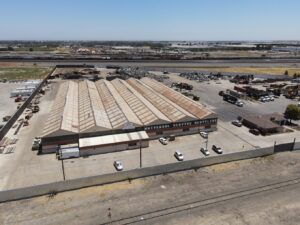
The company has been family owned and operated since 1996. It began as a one-yard operation in Stockton but now has locations in Stockton, Sacramento, Modesto, and Merced serving all or parts of 9 counties.
The company, founded by William Mendonca, is now the largest privately held metal recycler serving the Central Valley and is managed by the first and second generations. It employs about 100 people. Learn more https://bit.ly/485PCyC
The Sacramento Business Journal has posted an op-ed by FBAC Chairman Ken Monroe highlighting the need to enact further reforms to the Private Attorneys General Act (PAGA). The piece is behind the SBJ’s paywall, but if you’re not a subscriber here’ are the first few paragraphs:
Last June, the business community, legislators, trial lawyers and Gov. Gavin Newsom reached an agreement to reform California’s onerous Private Attorneys General Act.
PAGA, as it is universally called, was signed into law by former Gov. Gray Davis after he was recalled in 2003. It allows individual employees to file suits on behalf of the state over allegations that labor laws have been violated.
Over the years, it became a gold mine for trial lawyers who file thousands of lawsuits against employers while providing little benefit to employees.
Unfortunately, while some of last year’s reforms have been positive — employees now receive more of any settlement, while employers have an expanded right to cure any violations — it hasn’t stopped the deluge of PAGA lawsuits. In fact, California is on pace to have more than 9,000 PAGA lawsuits this year, more than before the reforms went into effect.
Clearly, further reforms are needed now.
Monroe said it was encouraging that the state’s Labor and Workforce Development Agency has caused a particularly egregious law firm to refile more than 130 suits, and said the best solution is for the state to finally provide funding to the agency to enforce labor laws in a timely fashion. Absent that, he suggested compensating private lawyers at the same rate as state attorneys to remove the windfall financial incentives.
PAGA is one of the biggest problems affecting family businesses in California and FBAC will continue its efforts to really reform the law once and for all.
FBAC is proud to announce BMO as the Central Valley Regional Sponsor, strengthening FBAC’s ability to support and advocate for family-owned businesses throughout the region.
With deep roots serving family-owned businesses, BMO brings a shared commitment to helping businesses thrive across generations. As a regional sponsor, BMO will play a key role in supporting FBAC’s mission to advance the long-term interests of family businesses in California through education, advocacy, and community engagement.
“BMO is committed to supporting family businesses in California to help build stronger communities and drive economic progress,” says Mauricio Romero, Managing Director and Sacramento and Central Valley Market Executive at BMO. “We’re excited to partner with the Family Business Association of California to do what BMO does best — providing the expertise, resources, and financial tools to help our customers, clients and the communities we serve grow and thrive.”
FBAC looks forward to working with BMO to create meaningful opportunities for engagement and support throughout 2025 and beyond.
“We are thrilled to welcome BMO as the newest Regional Sponsor of the Family Business Association of California,” said Ken Monroe, FBA Chair, and CEO at Holt of California. “BMO’s commitment to supporting family-owned businesses aligns perfectly with our mission to protect and promote the interests of family enterprises throughout the state. Their sponsorship enhances our ability to advocate for our members and provide valuable resources to help them thrive.”
For more information on FBAC and sponsorship opportunities, visit www.myfba.org.
About BMO Financial Group
BMO Financial Group is the eighth-largest bank in North America by assets, with total assets of $1.5 trillion as of January 31, 2025. Serving customers for 200 years and counting, BMO is a diverse team of highly engaged employees providing a broad range of personal and commercial banking, wealth management, global markets and investment banking products and services to 13 million customers across Canada, the United States, and in select markets globally. Driven by a single purpose, to Boldly Grow the Good in business and life, BMO is committed to driving positive change in the world, and making progress for a thriving economy, sustainable future, and inclusive society.
About Family Business Association of California
The Family Business Association of California (FBAC) is a nonprofit 501(c)(6) organization and the only association in the state dedicated exclusively to advocating for family-owned businesses at the California State Capitol. FBA champions pro-family business legislation, opposes harmful policies, and ensures that the voice of family enterprises is heard in Sacramento. As the backbone of California’s economy, family businesses benefit from FBA’s robust legislative advocacy, weekly news updates, economic insights, and peer-to-peer engagement opportunities.
Electric security fences like this one from AMAROK can now be permitted much more quickly.
FBAC, our Statewide Sponsor AMAROK, and other installers of electric fences won a great victory at the Capitol last year when our sponsored bill AB 2371 was signed into law. AMAROK installs 10-foot-high electric fences inside the fence of an outdoor storage facility. These electric fences aren’t lethal, but it is virtually impossible to get past them.
The bill was needed because the average time it took to get a permit in California for this simple concept was 372 days. Some local governments dragged the process out for as much as five years. Our bill provided that, if certain requirements were met, these fences could be installed without going through the permitting process.
With some good lobbying, the bill had unanimous support in both houses of the Legislature and was signed into law by the Governor on an urgency basis, so it went into effect on September 14, 2024. Since that time, in just five months, 450 fences have been installed and another 50 are in the pipeline. Approval times have dropped from that 372-day average to an average of just 16 days!
If this kind of reform could be done in more areas, it would really improve the business environment in our state. Kudos to AMAROK and our lobbying team for a job well done.
As California’s only organization solely devoted to promoting and protecting family businesses, FBAC has taken the following positions on four measures that will appear on the November ballot:
YES on Proposition 36, which will reverse the damage done by Prop. 47 in 2014 and address retail theft and homelessness. FBAC is an active part of the coalition working to pass this measure.
NO on Proposition 5, which would lower the threshold to pass local bond measures from 2/3 to 55%.
NO on Proposition 32, which would raise the statewide minimum wage to $18 an hour.
NO on Proposition 33, which would enable local governments to adopt rent control measures.
Prop. 36: California is suffering from a continued explosion in theft and trafficking of deadly hard drugs like fentanyl, often because the people committing these crimes do not face serious consequences. Prop 36 will make our communities safer by creating real accountability for those drug traffickers and criminals who repeatedly steal while also providing meaningful treatment incentives for individuals with mental health and drug addiction issues. For more information, visit https://voteyesprop36.com
Prop.5 is a direct attack on Proposition 13. It makes it easier to raise taxes by eliminating the longstanding two-thirds vote of the electorate required to pass local bonds (borrowed money that must be repaid with interest). All new bond measures for “infrastructure” (nearly everything is “infrastructure”) and for public housing projects would pass with just 55% approval instead of the current 66.7%. Local bonds are paid for with extra charges on property tax bills, adding to the tax burden on homeowners and businesses, leading to higher rents for tenants and higher consumer prices for everyone. For more information, visit https://nonewtaxes.com
Prop. 32 would increase costs on family-owned businesses that can least afford it and force small employers to increase prices for consumers to absorb the higher minimum wage. After the new California fast-food minimum wage law took effect, fast-food prices rose by 7% in six months, the fastest in the nation. Some well-known “value meals” now cost over 40% more in California than the rest of the country. Prop. 32 would bring these record-setting price increases to small restaurants, grocery stores, convenience stores, small retail shops, farmers, and more, so we’re going to see the same sticker shock everywhere. (Website not yet launched.)
If Prop 33 seems familiar, it’s because nearly 60% of California voters rejected nearly identical anti-housing schemes in 2018 and 2020. The measure is part of a broader anti-housing agenda and would effectively overturn more than 100 state housing laws, including laws making it easier to build affordable housing like ADUs. It would also authorize permanent price controls, even on single-family homes. Non-partisan researchers at MIT estimate extreme measures like Prop. 33 result in an average reduction in home values of up to 25%. For more information, visit https://noonprop33.com.