The Family Business Association of California today issued the following statement expressing disappointment in Gov. Gavin Newsom’s decision to support Proposition 15, the measure on the November ballot that would create an $11.5 billion tax increase on businesses.
“The Family Business Association is composed of family-owned businesses that have been investing in California for decades. Our members have a long-term view. We create jobs and opportunities for thousands of Californians. COVID-19 has hit us hard. Global, offshore competition has narrowed our margins. Asking us to now pay in many cases two or three times the amount in property taxes that we have historically paid means higher wages will be deferred and what limited job growth there is will stop and any new jobs likely will be created in other states. Proposition 15 is a terrible idea, especially during these difficult times. We are very disappointed by Governor Newsom’s endorsement of this proposition that will seriously harm our businesses and our employees’ job security.”
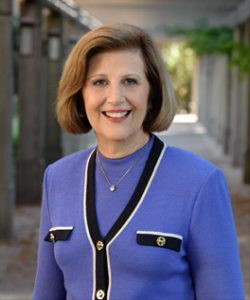
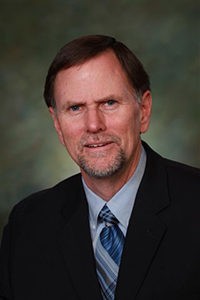
By Ken Monroe, FBA Chairman
California’s 1.4 million family-owned businesses are in the fight of their lives.
Some have been shuttered since March, still waiting nervously for an all-clear from state officials. While their revenue stopped, the bills kept coming. And many voluntarily kept paying wages, health benefits and other costs to take care of their greatest asset: their employees.
Other businesses benefited from the “essential” tag (or so they thought) and were allowed to continue operations. But staying open during the stay-at-home order meant limited operations and large drops in revenue, yet higher costs to modify how we work to protect workers and customers.
The point is regardless of the size or industry, few businesses have made it through the past few months without major harm.
With California reopening, there seems to be a light at the end of the tunnel. The question now at hand is this: will state lawmakers allow that light to shine and help business power an economic comeback? Or will our prospects dim under short-sighted policies that throw more burdens and new costs on employers, slow job creation and kill future growth?
There are several areas where lawmakers can show whether they are friend or foe to family-owned businesses, including how they deal with new taxes, restrictive contracting rules and predatory lawsuits.
Another threshold test will be workers’ compensation. California employers have historically paid among the highest costs for workers’ compensation insurance. A lot of these costs do not benefit the workers who truly need it – instead money is skimmed away by lawsuits and outright fraud.
As a result of COVID-19, a new workers’ compensation threat has emerged: a “presumption” that all COVID-19 cases should be blamed on work and, therefore, eligible for workers’ compensation benefits.
Let me be clear: employers support – and pay for – our workers’ compensation system as an important safety net. We do our best to keep workers safe and healthy. When accidents or illnesses occur because of work, our workers should get the medical care and benefits they need.
Presumptions turn the system inside out. Instead of providing these benefits for work-related injuries or illnesses, employers will pay for any instance when a worker gets sick – even if the illnesses was caught a home from a family member or out in public from a stranger.
In early May, Gov. Gavin Newsom enacted an emergency presumption, when most of our state was still closed down.
As Californians get back to work – and back to their own personal lives – blaming all COVID-19 cases on work is unfair and unjustifiable. Worse, it will cost employers billions of dollars to pay benefits that have nothing to do with work.
If lawmakers expand or extend the workers’ compensation presumption – as several have proposed – it would deal a devastating blow to family-owned businesses. Jobs will be lost, or not brought back. Economic recovery and growth will be dampened. And, ironically, it will depress the tax revenue our state leaders need to restore public services, such as education and community health.
Business will be the engine of the economic recovery. For state lawmakers, the choice is clear: are they friend or foe?
Ken Monroe is president and CEO of Holt of California, a major Central Valley Caterpillar dealer, and chairman of the Family Business Association of California. This op-ed first appeared in the Bakersfield Californian.
Two months into California’s economic lockdown, it’s time to start working on creating a V-shaped economic recovery.
Gov. Gavin Newsom has shown strong leadership during the past couple months in response to the coronavirus outbreak. Now he needs to unleash the power of private enterprise to protect our livelihoods.
Ken Monroe
He made the right decision in moving the state into a shelter-in-place strategy at a time when many people were still not convinced COVID-19 was that serious a threat. As a result, the virus has not had the same impact here as it has in many other large states.
It is also important that we continue to take prudent precautions to prevent a spike in cases or a later second wave of illnesses.
However, the unemployment statistics are beyond alarming. Nearly 4.6 million California workers have filed for unemployment benefits since March, and Newsom projects the state’s unemployment rate will peak north of 24.5%. In comparison, the jobless rate peaked at “just” 12.3% during the Great Recession in 2010.
While many counties are easing their shelter-in-place mandates and businesses are trying to reopen, many sectors of the economy remain shut down. And most businesses that are open or are trying to do so have had to radically rethink their operations to allow employees and customers to practice safe social distancing.
As a result, many of the state’s 1.4 million family businesses are struggling, even with the influx of federal assistance. If the strict quarantine lasts much longer, many of these businesses – and the 7 million jobs they provide – will be gone.
Needless to say, billions of dollars in tax revenues that state and local officials were counting on to provide the wide array of government services are gone as well. If the economy doesn’t rebound, the loss in tax dollars will be far greater, resulting in even more painful cuts.
We will not be going back to “business as usual” any time soon, but there are four things the governor could do to jumpstart the economy and help family businesses in particular before it’s too late for many of us to resume operations.
First and foremost, he should urge backers of the so-called split-roll initiative to stand down. Now is not the time to make dramatic changes to Proposition 13and burden struggling businesses with an additional $12 billion in commercial property taxes. Even in the best of times, raising business taxes by this huge amount would cause many companies to fail and cause many others to downsize or relocate out of state. Doing so now would be devastating to the economy.
Second, he should suspend AB 5. The prohibitions against independent contractors are so restrictive that they will make it hard for many family businesses to get back on their feet.
Third, he should work with lawmakers to provide protection during the rest of the year for employers against wage and hour lawsuits authorized by the Private Attorneys General Act. These lawsuits filed by trial lawyers can cost employers hundreds of thousands of dollars for paperwork violations even when workers incur no damages. Family businesses will need as much flexibility as possible to rebuild operations after this shutdown.
Finally, the governor has the authority to suspend the mandated minimum wage increases if economic conditions warrant it – and clearly they do. Holding off further increases until our family businesses can recover would be extremely helpful.
The governor has shown Californians leadership to prevent the coronavirus from causing a public health catastrophe. It’s now time for him to show the same leadership to prevent an economic catastrophe that could last for years.
_____
Ken Monroe is chair of the Family Business Association of California, kmonroe@holtca.com. He wrote this commentary for CalMatters.
Both family businesses and private companies tend to struggle with the decision of when and why they should bring outside professionals on to their boards of directors. It’s not uncommon for us to hear things such as:
“Should I have a board that includes outside directors? Why?”
“I don’t want someone telling us what to do. What if they take over and we can’t do what we want to do? Will they slow us down?”
“It will cost us money to put outside board members on our board, and we will have more work to do. Will they want to look at our company financials?”
“Who would we ask to be on our board?”
We have heard these questions, concerns and reasons time and time again about why companies believe they should — or should not — have outside board members.
I have had the honor of sitting on a couple of family owned boards, and have immensely enjoyed the privilege of doing so. I haven’t chosen to do so based on any of the reasons suggested above. Rather, I have done so because I believe I bring an opportunity for the CEO to ask for advice, provide a different perspective all while remaining objective because I am not wrapped up in the internal operations of the company.
Outside board members enjoy and feel good when a CEO asks questions that complement their experience. It helps the CEO make objective decisions — having someone they can bounce a problem off of, as well as see all sides of a problem and help find the best solution. For me, having a banking background in addition to strategic and leadership skills-set, I have been able to provide an outside perspective that has helped identify strengths, or something the CEO might want to be aware of. Candidly speaking, I may initially question something, but it truly is for the good of the company. Creating an opportunity to broaden a company’s perspective is helpful and provides the CEO an opportunity to both weigh and debate the facts from knowledgeable people who are on their side.
Statistics show there are a higher percentage of companies that make it through a crisis and a downturn in the market with outside directors. Remember, board members do not manage the company they ensure the company is well managed. A board of advisors may be something to consider in a family or privately held business. It’s important to talk through the objectives and the skill set of who you would like to invite on to the board and why.
For the benefit of this strategic initiative, I asked FBA Past Chairman David Lucchetti, President and CEO of Pacific Coast Building Products, a family-owned business, why they have outside directors.
“I think it’s important because an outside board member offers a different business knowledge and an outside perspective,” Lucchetti said. “This outside perspective helps provide a good checks and balances system. They can help the family business to see beyond what they’ve always done by raising important questions, and helping the business make future decisions.”
Jeanne Reaves is a Regional Sponsor of FBA and provides consulting services to family businesses. For more information, visit the Jeanne Reaves Consulting website.
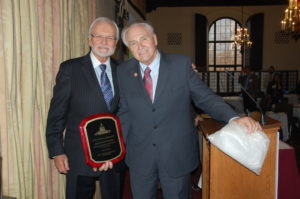
The Family Business Association of California, the only organization advocating exclusively for California’s thousands of family businesses, has named Sen. Jim Nielsen, R-Tehama, as its Outstanding Legislator for 2019.
FBA Executive Director Robert Rivinius said the veteran lawmaker was selected because he’s always been a strong advocate for family businesses.
Robert Rivinius, left, and Sen. Jim Nielsen.
“Sen. Nielsen grew up in a family business and has always been a strong advocate for family businesses during his years in the Legislature,” Rivinius said. “We need more lawmakers who understand the unique issues facing family businesses and who recognize how important family businesses are to the state’s economy and the fabric of our communities, and we thank him for his support.”
Nielsen said he was proud to receive the recognition.
“California needs strong family businesses because they’re the cornerstones of their communities and the foundation of our state’s economy,” Nielsen said. “I want to thank the leaders and members of FBA. It is an honor to be recognized.”
Nielsen was first elected to the Senate in 1978, serving until 1990. He returned to the Legislature in 2008 as a member of the Assembly and was elected to the Senate in 2012. He represents all or portions of Butte, Colusa, Glenn, Placer, Sacramento, Sutter, Tehama and Yuba counties. He serves as Vice Chair of the Budget & Fiscal Review and Elections & Constitutional Amendments committees and is a member of the Governmental Organization, Governance & Finance and Veterans Affairs committees.
He has been recognized by numerous taxpayer and small business groups for his leadership on state budget issues and for his unrelenting fight against profligate government spending. He is also a leader in protecting and strengthening private property rights and for reforming state regulations and out-of-control spending.
Founded in 2012, the Family Business Association of California is the only organization working exclusively at the Capitol to educate lawmakers and regulators about the importance of family businesses to the state’s economy and to their communities and to advocate positions on legislation and regulations. FBA has also taken the lead to defeat recent proposals to impose a state inheritance tax, which would make it much more difficult to keep businesses family-owned from generation to generation.
The US economy is clearly slowing. After adjusting for inflation, GDP grew by 2.9% in 2018, and by an even better 3.1% in 19Q1. But growth slowed to just 2% in 19Q2, is expected to grow at a similar pace the rest of this year, and to then slow further in 2020. According to some pundits, this rapid slowing is a clear sign we are in the final stages of this economic recovery and that a recession is fast approaching. They point out that we are in the 11th year of this recovery, making it the longest one in history, and as such we are simply due for a recession. Fortunately, they are wrong, expansions do not die of old age. Let me explain.
Elliot Eisenberg
Prior to WWII, the idea that expansions were more likely to end as they got older was very common and was frequently mentioned in business and economics textbooks. And indeed, it was justified by the data. Using a statistical technique called survival analysis, which looks at the probability of some particular event occurring given the age of the subject, be it a person or a car or sports team, it is clear that prior to WWII recessions were more likely to happen the longer the recovery.
The intuitive starting point is based on analogies to human mortality. In short, this presumption suggests that as an economic recovery ages, assorted imbalances and rigidities accumulate that hobble the economy and make it more fragile. As a result, a recovery is increasingly put at risk by smaller and smaller shocks, and it becomes increasingly likely the economic expansion will fall into recession the longer it lasts. Analogies to cars are also frequently cited. All else equal, as a car ages, the probability that it will suffer a mechanical breakdown increases. Thus, older cars are considered less reliable and generally command a lower price than new ones.
Happily, however, various postwar changes in the economy have contributed to more robust and longer-lived expansions! One key change has been the rise in the share of services produced in the economy and the concomitant decline in goods. This change has diminished the importance of inventory fluctuations and, as a result, has moderated the business cycle.
The role of the federal government has also drastically changed. Since WWII, government activity has, among other things, increasingly focused on stabilizing the economy. In short, the government has gone from a laissez-faire hands-off attitude towards the economy to a forceful, countercyclical policy. This approach has not only prolonged business cycles but has, importantly, eliminated the pattern of cycles becoming increasingly fragile as they age. In a sharp reversal, it is now recessions that are increasingly likely to end the longer they last as policymakers take action to revive growth, such as passing tax cuts and spending increases and lowering interest rates.
In closing, enjoy the current expansion. Treat it like a good friend or a fine glass of wine and savor every extra month together. While it is almost ten and a half years old, it might well last another year, two if we are lucky. Better yet, the recession that follows is not likely to be particularly deep, as there are no asset bubbles in the making, nor are the sectors of the economy that usually drive us into recession growing inappropriately quickly.
Elliot Eisenberg, Ph.D. is President of GraphsandLaughs, LLC and can be reached at Elliot@graphsandlaughs.net. His daily 70-word economics and policy blog can be seen at www.econ70.com.
 The point is regardless of the size or industry, few businesses have made it through the past few months without major harm.