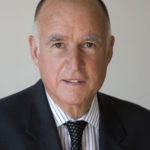
Governor Brown delivered his 16th – and final – State of the State address last week, asserting that the “bolder path is still our way forward” on climate change, infrastructure investment, health care, education, and criminal justice.
In his remarks, the Governor pointed to a number of far-reaching, bipartisan measures passed in recent years – from pension and workers’ compensation reform to the Water Bond, Rainy Day Fund, and the Cap-and-Trade Program – that demonstrate “some American governments can actually get things done.”
Some of the major points he discussed in his speech included:
“We can’t fight nature. We have to learn how to get along with her.” He discussed the negative climate impact from forest fires and discussed better management practices for forests are needed.
He made a strong statement for California WaterFix - the controversial twin-tunnels project his administration has been working on its entire tenure.
The Governor included a pitch for the gas tax, which he said “wasn’t easy, but absolutely necessary.” The measure faces an initiative to repeal it this fall.
He made a strong pitch for high-speed rail, which garnered little applause and even some boos. He made a light-hearted statement that high-speed rail “will last 100 years — after all you are gone.”
He discussed his proposal for online community college for under-skilled Californians in the workforce and specifically stated it would not compete with traditional “brick and mortar” colleges.
The final policy point during the address was identifying criminal justice reform.
The State of the State is often just a place where the Governor can expand upon his budget priorities and policy focus for the year.
Legislature Considers Tax Increase on Businesses
California Democratic lawmakers have proposed a corporate income tax surcharge that would take half of the savings businesses get under the federal “Tax Cuts and Jobs Act” to fund programs for lower- and middle-income Californians. State Assembly members Kevin McCarty from Sacramento and Phil Ting from San Francisco introduced ACA 22, which would amend the state Constitution and create a 7 percent tax surcharge on corporations’ net income over $1 million, beginning January 2018. Revenue from the tax would be allocated to education spending and to services targeted to support lower- and middle-income Californians, including expanding the state’s earned income tax credit and providing funding for child care and healthcare programs.
California’s current corporate tax rate is 8.84 percent of net income; S corporations pay a tax of 1.5 percent of their net income. Schanz said the tax surcharge would apply to C corporations and S corporations but not limited liability companies, in order to protect small businesses. If approved by two-thirds majorities in the State Legislature, A.C.A. 22 would go before voters on the November 2018 ballot.
According to Ting and McCarty, the measure is in response to the recent federal tax reform that reduced the federal corporate tax rate from 35 percent to 21 percent, a 14 percentage point reduction. A release from McCarty’s office explained that the proposed 7 percent surcharge would be equivalent to half the savings California companies will realize from the reduced rate. The Sacramento Bee has reported that proponents of the measure estimated it could raise as much as $15 billion to $17 billion annually.
The lawmakers said the corporate tax cut will force reductions to federal spending on programs for the poor and for middle-income earners. “It is unconscionable to force working families to pay the price for tax breaks and loopholes benefiting corporations and wealthy individuals,” Ting said in a statement. “This bill will help blunt the impact of the federal tax plan on everyday Californians by protecting funding for education, affordable healthcare, and other core priorities.”
The measure isn’t the only legislation California lawmakers have proposed in response to the new federal tax law. One high-profile proposal by Senate President Pro Tempore Kevin de León, D-Los Angeles — S.B. 227 — would circumvent the new federal cap on state and local tax deductions by providing a state individual income tax credit in exchange for taxpayers’ charitable contributions to California. Taxpayers could then claim the federal charitable deduction instead of the capped SALT deduction.
Legislation that would have reinstated the Estate Tax in California if the Federal government repealed the tax died last week.
SB 726, by San Francisco Democrat Scott Wiener, would have asked voters to reinstate California’s estate tax if the federal government had repealed it. The bill became difficult to justify after the final federal tax reform legislation doubled the estate tax exemption for a period of eight years, forgoing an outright repeal.
After fierce opposition led by the Family Business Association, Senator Wiener was forced to amend the bill to prescribe procedures for fiscal review on any tax legislation considered that exempts products from sales and use taxes.
“Defeating this effort to reimpose the death tax in California has been our top priority for the past year, and we’re pleased that Senator Wiener has removed the language from his bill,” said FBA Executive Director Robert Rivinius.
“However, there is already an initiative campaign under way to reinstate the Death Tax to pay for higher student aid benefits — and given the costs associated with numerous legislative proposals, it is quite likely that resurrecting the death tax will be proposed again. FBA will remain vigilant and be ready to fight any new proposal.”
The combination of solid, widespread global growth; strong labor markets; low inflation; improving commodity prices; a slightly weaker dollar; and continued easy monetary policy from most central banks sets the stage for a good year. Moreover, the recently passed front-loaded tax cuts here in the U.S. will help by adding a pleasant tailwind to the domestic economy. The possibility of increases in infrastructure and defense spending, along with the continued deregulatory efforts of the Trump administration, make the domestic economic landscape heading into 2018 as strong as it has been since the end of the Great Recession.
However, there are also economic headwinds. The fear of inflation could spook the Federal Reserve to raise rates more rapidly than expected, which would slow growth and unsettle financial markets. A large confidence-shattering drop in the stock market, for any number of reasons, might hurt the economy. With the now-low tax rate on repatriated earnings, American firms might bring back substantial profits from abroad, and in the process, boost the dollar, which will hurt manufacturing activity. Lastly, geopolitical problems always lurk and could easily have negative growth implications.
With all this in mind, I expect full-year 2018 GDP to come in at 2.6%, slightly higher than the 2.3% growth experienced last year and the 2.1% average rate of growth since the end of the Great Recession. Headline inflation looks to pick up from roughly 2% to 2.3% in 2018, while core inflation (which excludes food and energy) will edge up only slightly. Because of the slow rise in core inflation, the Federal Reserve will probably have the luxury of time to raise the federal funds rate from where it is now, at 1.375%, to 2.125% by year’s end, with a quarter-point rate increase roughly every three or four months with the first one in March.
Turning our attention to the labor market, I expect net new monthly job growth to average 150,000/month, which, while down from 167,000/month in 2017, is excellent given that we are late in the business cycle and few potential workers remain on the sidelines. The unemployment rate will fall from 4.1% today to 3.6% or even 3.5% by year end, a rate not seen since the late 1960s! As the labor market tightens, nominal wage growth should increase in 2018, with average annual wage increases rising from 2.4% to 2.75% and as much as 3% by the end of the year: a healthy rise.
Because of faster GDP growth and the falling unemployment rate, 10-year Treasuries will end 2018 at 2.75%, and the rate on 30-year mortgages will be at or near 4.40%. However, continued easing of credit conditions and rising consumer spending due to continued strong employment growth and better wage growth will keep the economy and housing market on track.
Despite passage of the new tax bill, which is likely to modestly slow home sales and house price appreciation in some high-cost areas because of the reduced benefits of homeownership, housing starts should increase by about 7%, to 1.29 million. Single-family starts will likely total 930,000, up from 850,000, while multifamily starts should flatline at about 360,000. New and existing home sales should collectively rise by about 3% and end the year at 6.35 million, with mortgage purchase volume advancing by $100 billion, and refinance activity falling by about $200 billion due to the rise in mortgage rates.
Housing inventories will, regrettably, remain unchanged, and combined with limited new home building, home prices will rise by 5%. Motor vehicle sales will slip to 16.5 million from 17.1 million and the chances of a recession in 2018 is low given the very solid global economic conditions that currently prevail. I peg the chances of a recession in 2018 at just 15%.
Elliot Eisenberg, Ph.D. is President of GraphsandLaughs, LLC and can be reached at Elliot@graphsandlaughs.net. His daily 70-word economics and policy blog can be seen at www.econ70.com.
In addition to the FBA priorities for 2018, here are some other issues that will impact businesses and the people of California in the coming year:
PAGA – the Private Attorneys General Act has been a disaster for many businesses in California. It can cost hundreds of thousands or millions of dollars to settle PAGA claims with the great majority of the money going to the state and the plaintiff’s lawyers while the supposedly harmed employees receive little. The Legislature has refused to deal with the issue, so a coalition of business leaders, including FBA, have been developing a ballot initiative to deal with it. Such initiatives are very costly including gathering qualifying signatures and then running an effective campaign. Fundraising is a major issue, as always.
Poverty – even though the published unemployment rate in California is around 5 percent, the gap between the “haves” and the “have nots” continues to widen, which is not a healthy situation for California. One gubernatorial candidate, Democrat Antonio Villaraigosa, has called for a revamping of California’s “Byzantine and bureaucratic regulatory framework” that impacts all businesses in the state. The hidden costs of doing business in California hits those below the poverty line especially hard.
Taxes – in addition to the proposed California estate tax measure, there will be other tax issues in play. There is never enough money for those in the public sector and they will be looking to weaken Proposition 13 by creating a “split roll” where commercial properties would pay taxes based on current market value. Such a scheme is estimated to create a $9 billion windfall and the costs would have to be passed on to consumers if businesses were to stay viable. In addition, much of California’s budget money come from the top 1 percent of earners through the personal income tax, which tops out at 13.3 percent. With the recent federal tax reforms, this will create yet another problem for California, with lots of creative solutions being kicked around, many of which don’t make much sense.
Housing – California needs hundreds of thousands of new housing units for its nearly 40 million residents. The recent efforts of the Legislature to solve the problem are more of a Band Aid than a cure. When you add in the new federal tax limitations on deductibility of property taxes and mortgage interest, you only exacerbate the problem.
Transportation – even though promising in his 2010 campaign that there would be no new taxes without voter approval, Governor Brown last year signed legislation that added 12 cents per gallon to the gas tax, 20 cents per gallon to the diesel tax, and created additional vehicle fees. There is an effort underway for a referendum on that legislation and polling for the repeal runs as high as 75 percent in favor of it.
Education – nearly half of California’s discretionary funds go to education, but there is still much to be desired in the ultimate success of students. Rather than push for reforms that would better spend the available funds, organizations like the California Teachers Association (union) just keep pushing for more money.
Public Pensions – With hundreds of billions of dollars of debt hanging over state and local governments due to the unfunded liability of public pension funds, something will have to give at some point.
In addition to all of this, we have other major issues like crime, healthcare, and the environment to deal with. It makes one wonder if California is a governable state, but organizations like FBA will keep fighting to make improvements for the business climate in the Golden State and do our best to kill proposals harmful to family businesses.
California leaders continue to pile requirements on employers. A minimum wage increase, more paid family leave, and more scrutiny in hiring practices are just a few issues that were enacted into law as of Jan. 1.
The statewide minimum wage went up by 50 cents per hour to $10.50 per hour for employers with 25 or fewer workers and to $11 per hour for employers with 26 or more employees. That increase was mandated under a 2016 law that is gradually increasing the minimum wage to $15 per hour. Be aware, some cities have higher minimum wages.
California employers can no longer ask most job applicants about their criminal records until a conditional offer has been made, and can’t ask any job seekers about their salary history unless the applicant volunteers this information, according to two new workplace laws that will have broad impact when hiring new employees.
AB 168 prohibits all public- and private-sector California employers from asking about a job applicant’s current or prior salary in job applications, interviews, and through outside recruiters. They also cannot consider salary history in determining whether to hire someone, unless the applicant voluntarily discloses the information. It also requires employers to give an applicant, upon request, the pay scale for the position. The main goal is to stop the perpetuation of gender pay gaps from one job to the next.
Experts say the most significant new law impacting hiring is AB 1008, the California Fair Chance Act. It prohibits employers with five or more employees from seeking information about a prospective worker’s criminal history in job applications or interviews or running a criminal background check until a “conditional offer of employment” has been made. The goal is to reduce recidivism by preventing employers from rejecting ex-offenders out of hand. The law exempts certain positions, such as those where a criminal background check is required by law.
Another new law, SB 63, requires California employers with 20 or more employees to give up to 12 weeks of unpaid, job-protected leave to eligible workers to bond with a new child. They also must maintain the employee’s health coverage during this baby-bonding leave. Employers with 50 or more employees already have this requirement. Mothers and fathers, including foster and adoptive parents, can take it. Some employees may get partial pay for up to six weeks during this leave through the state’s Paid Family Leave program. Baby bonding must be taken within 12 months of the child’s birth, adoption, or foster placement.
Please discuss new laws and compliance with legal counsel and your human resource professional. With the Private Attorney Generals Act (PAGA) liability, employer exposure is significant.
Food tax bills set for hearing January 8th
Two pieces of legislation authored by Assembly Member Cristina Garcia, D-Bell Gardens, would dramatically reverse a policy that voters established in 1992. AB 274 and ACA 2 attempt to reinstate state and local sales taxes on candy and processed snacks. They are scheduled to be heard in the Assembly Revenue and Taxation Committee next Monday. It is important to note that the current chair of the committee who had expressed grave concerns about the two bills recently resigned.
In 1991, during extreme fiscal challenges for the state, legislators enacted a “snack tax” but it immediately became apparent that arbitrary taxes on food products was difficult to enforce, define, and implement. Consumer frustration led to the passage of Proposition 163 in 1992. Prop. 163 prohibited via the California Constitution state and local sales taxes on any food and water products; the essentials of life. One of the main arguments to voters was that food taxes are regressive and fall most heavily on those who are least able to afford them, whether those taxes are imposed on “candy,” “processed snacks,” or other foods. AB 274 and ACA 2 reopens these issues to collect a tax that would be allocated to public health actions and diabetes.
The legislation would impose new taxes on “candy or confectionary” items and “processed snacks.” There are concerns about how the bills’ definitions would be implemented. To cite just a few examples, food items labeled as candy would be taxed unless they are made from maple sugar and labeled as candy, in which case they would not be taxed. Granola would be taxable in some cases, yet granola cereal bars are specifically exempted from taxation. A candy bar would be taxed but a frozen version of the same product would be exempt. Making sense of contradictions like these will present government tax agencies with an enormous amount of work as they attempt to provide guidance for retailers.
The Association is working hard on the issue and trying to ensure the definitions are precise and to oppose “taxes” on key California foods and commodities.
By Elliot Eisenberg, Ph.D., GraphsandLaughs, LLC
November 2017
With the possibility of tax reform and tax cuts right around the corner, it is important to understand how the proposed doubling of the standard deduction will impact households and will essentially render the mortgage interest deduction irrelevant for almost all US home owners.
The current Republican plan raises the standard deduction from $6,350 to $12,000 for single filers and from $12,700 to $24,000 for married couples filing jointly. While the much larger standard deduction looks very advantageous, the new tax plan eliminates the personal exemption, which is currently $4,050/person. This means that the increase in tax-free income rises by just $1,600 ($12,000 - $6,350 -$4,050) for single filers and by $3,200 ($24,000 - $12,700 - $8,100) for married couples filing jointly. While these sums are not trivial, they are also not as large as advertised.
The Unified Framework developed by the White House and the Republicans also proposes eliminating all itemized deductions except for mortgage interest and charitable donations, and state and local property taxes up to a cap of $10,000. While this appears to largely maintain the status quo, think again. Traditionally, tax filers added up mortgage interest, charitable donations, state and local taxes, and healthcare expenses. If those deductions (the most commonly used) collectively exceeded the standard deduction, itemizing would make sense and one’s tax burden would decline.
Now, not only is the standard deduction almost doubling, but the deductibility of state and local income taxes and healthcare expenses is being eliminated. This means that to itemize, the sum of mortgage interest paid, charitable contributions, and property taxes must exceed $24,000. Few married couples hit that threshold. I estimate that no more than 6 percent of all households will itemize under the proposed plan compared to about 27 percent today.
Moreover, the deductions of those who will still itemize will be worth less than before. This is because the tax advantage of itemizing depends entirely upon how much one’s itemized deductions exceed the standard deduction and one’s marginal tax rate. Given the increase in the size of the standard deduction, the amount by which one’s now smaller itemized deductions exceed the newer, higher standard deduction will necessarily fall. And, as lowering tax rates is a part of this plan, the after-tax tax savings from itemizing will necessarily decline as well.
As for the mortgage interest deduction, I estimate that the percentage of households that currently own their home and will still be able to deduct mortgage interest will fall from the current level of about 33 percent to about 7 percent.
Here is an example to show why. Suppose a husband and wife have $20,000 in itemized deductions including $8,000 for state and local income taxes, $2,000 in charitable donations, $2,000 in property taxes, and $8,000 for mortgage interest. By itemizing now, that couple can reduce their taxable income by an additional $7,300 ($20,000 minus $12,700, the current standard deduction).
If in the 25% tax bracket, the tax savings on that additional $7,300 are $1,825. But, as state and local income taxes will no longer be deductible, this couple would then only have $12,000 in deductible expenses. As that is lower than the $24,000 standard deduction, they would not itemize despite paying $8,000 in mortgage interest.
This inability to deduct mortgage interest, despite it being technically deductible, will make home ownership slightly less appealing, and that will reduce the demand for home ownership, thus lowering house prices. To be specific, house prices are likely to fall by between 5 percent and 10 percent, with the decline increasing the more expensive the house and the higher the bite taken by both state and local income taxes.
By nearly doubling the standard deduction and doing away with several key itemized deductions, the proposed Republican tax plan will, if it becomes law — and that is still a big “if” — reduce the value of itemizing and the mortgage interest deduction even though mortgage interest will remain deductible. And that will lower house prices.
Have a wonderful Thanksgiving, a merry Christmas, and a happy 2018 and see you in January!
Elliot Eisenberg, Ph.D. is President of GraphsandLaughs, LLC and can be reached at Elliot@graphsandlaughs.net. His daily 70-word economics and policy blog can be seen at www.econ70.com. You can subscribe and have the blog delivered directly to your email by visiting the website or by texting the word “BOWTIE” to 22828.