Great news! The Assembly Business and Professions Committee on April 5 unanimously passed AB 2611, FBA’s sponsored bill to create in statute a definition of a family-owned business. A uniform clear definition will provide many benefits, including that it would provide one definition that can be referenced by local municipalities that want to promote family-owned businesses within their local jurisdictions. You can read more about the bill here.
Thanks to the bill’s author, Assembly Member Tom Daly of Anaheim, committee Chair Marc Berman of Palo Alto, Vice Chair Heath Flora of Ripon, and the other committee members for voting for our measure.
The measure is now pending before the full Assembly.
FBA is pleased to announce that two new companies have joined California’s only organization working exclusively to promote family-owned businesses.
ISYS Solutions, Inc. provides onsite medical case, rush medical case, catastrophic medical case, and telephonic medical case management for worker’s compensation, insurance, and healthcare. The Brea-based company was founded over 20 years ago by Chris Loumakis, and his daughter, Alysha Loumakis-Calderon, is now President & COO; daughters Lyndsi and Lorika Loumakis are corporate vice presidents. The company is highly rated by its clients and the mission statement is “ISYS is an organization of people with big minds, big hearts, lots of spirit and good character. We work creatively and intensively to provide case management solutions and have a positive impact on those we serve.”
Headquartered in Pomona, Performance Engineered Products, Inc., is an industry-leading custom plastic injection molding manufacturer with a national market. The company employs over 100 and was founded in 1981. It is owned by Dennis Savalia, who immigrated to the U.S. from India in 1986 and began his first plastic injection molding business in 2007. The company’s core values are empowerment, discipline, equality, prosperity, and teamwork.Thanks to FBA Director and SoCal Chapter Chairman Al Garcia for bringing this new company to FBA.
FBA has joined a coalition opposing SB 1127 (Atkins), which fundamentally alters longstanding rules and timeframes for determining eligibility for workers’ compensation claims and, as drafted, would dramatically increase systemic friction and litigation. SB 1127 reduces the timeline for employers to make a decision about covering a claimed injury but it does not harmonize any of the other statutes and regulations that prevent employers from complying with the new timeline. The bill changes the rules for all claims – including public- and private-sector employers – but the provisions as they apply to public employers are especially challenging.
SB 1127 has three main provisions, all of which are problematic:
Reduces the timeframe allotted for employers to investigate claims
Imposes massive new penalties on employers
More than doubles duration of temporary disability for cancer presumption claims
In addition, SB 1127 does not provide sufficient time to investigate claims, it creates new penalties that make taxpayer funded presumption claims dangerous to investigate, and it more than doubles temporary disability benefits.
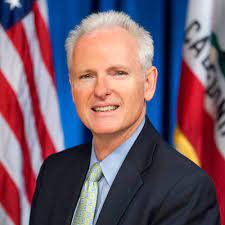
The Family Business Association of California is committed to helping our state’s 1.4 million family-owned businesses survive and prosper. To do this more effectively, a common agreement and understanding of what constitutes a family business is necessary. The Family Business Association is taking on this challenge by sponsoring AB 2611, introduced on February 18 by Assembly Member Tom Daly, D-Anaheim (left).
AB 2611 sets out, for the first time in state statute, a definition of a family-owned business. A statutory definition of a family-owned business is important for California because a family-owned businesses is distinct in many ways — both in terms of successes and challenges. AB 2611 sets out that, to be deemed a family-owned businesses in statute, the business must be privately held; strategic influence is exercised by family members; the business must demonstrate continuity across generations; have its headquarters located in California; and have been in business for no less than 10 years.
A uniform clear definition will provide many benefits including one that can be referenced across codes in California including Tax and Government codes and it provides one definition that can be referenced by local municipalities that want to promote family-owned businesses within their local jurisdictions.
Under AB 2611, the definition of a family-owned business is proposed to be added to the statues covering the Governor’s Office of Business and Economic Development (GO-Biz) program. The successful GO-Biz program offers a range of services to business owners including attraction, retention and expansion services, site selection, permit streamlining, clearing of regulatory hurdles, small business assistance, international trade development, assistance with state government, and much more. Importantly, AB 2611 will let California lead the nation in a positive direction by being the first state to statutorily define a family-owned business so that decision makers are able to better understand the unique challenges of operating community-based businesses when considering future legislative and regulatory actions.
The ongoing debate about businesses moving out of California rages on, with business groups pointing to the number of headquarters moving out of California and many of our politicians pointing to California’s rank as the fifth-largest economy in the world with tech start-ups still growing.
Most family businesses have many key performance indicators (KPIs) they use to measure their success, and well-managed companies focus on the critical few KPIs that will present a major issue for the business if they turn down.
Unfortunately, besides their poll numbers and fundraising for future elections, many politicians don’t seem to focus on critical indicators. But one irrefutable negative indicator that they should be watching and start doing something about is the loss of a congressional seat. Our politicians proudly boast that legislation passed in California will be the lead for the rest of the country, but for the first time in 171 years, California’s political voice is getting a little softer as our population actually decreased in 2020.
Most family businesses try to ensure a stable, consistent workplace by treating employees like family, and as a result many choose to stay with that company for their entire careers. At my family business, Holt of California, we ask our employees to complete an exit interview if they leave the company. That allows us to look at overall trends and enables us to make adjustments if there appears to be an area where employee satisfaction lags.
Over the past few years, we have seen an increase in the number of employees leaving for other states. In the past two years alone, we have had 30 employees leave the state. All were hardworking, excellent employees and none are easily replaced. While with employees who are leaving our company but staying in California we can modify compensation, vacation and other benefits to get them to stay or come back, there is little we can do to convince employees who have decided to leave the state to stay. In fact, many employees who left the company but remained in California came back to work for us after discovering the grass is not always greener elsewhere. We have only had one come back from out of state.
Reasons to leave the state vary. Many follow their adult children who moved elsewhere to look for opportunity. But many others leave to improve their own qu
ality of life, citing California’s high cost of living, the homeless crisis and cultural issues. Statistics show that the majority of people moving out are blue-collar families with children who have had enough and see a better future elsewhere. In short, the reason California has always grown is why our population is declining: people see the way to a better life elsewhere.
California’s 1.4 million family businesses employ 7 million Californians. However, the impacts from COVID-19 have created a significant challenge for our members to find enough employees to get the job done. Just look at all the help-wanted banners you see as you drive down the street. It is difficult to find enough new employees to serve our customers and the last thing we need is employees leaving the state for good. Unless corrected, the shrinking workforce that we are seeing will damage California’s ability to continue to maintain that high economic worldwide status we so proudly proclaim as a final measure of our success.
Perhaps our politicians need to develop an exit interview for the productive residents leaving the state and use the information to adjust their policies to encourage people to stay and help family businesses recruit those that left back to the companies and jobs that they once loved.
Two businesses recently joined the Family Business Association of California, the only organization in the state that focuses exclusively on issues affecting California’s 1.4 million family businesses.
Ming’s Recycling Corporation recycles 230,000 tons of aluminum cans, plastic, fiber, and non-ferrous metals every year. Founded in 1989 by Ming Luong, the Sacramento-based company employs 110 people and operates a second location in Hayward. Luong’s son, Kenny, is the current president and his brother, Kevin, gave up his practice as an orthopedic surgeon in 2006 to join the company as marketing director and CFO.
Joining as an associate member is The Policy and Taxation Group, a company formed in 2013 to fight the federal death tax and educate the public about estate and fight taxes and generation-skipping issues that can seriously affect the ability of family businesses to remain family-owned into the next generation. The group is based in Anaheim Hills.
FBA Executive Director Robert Rivinius welcomed the new members and said they will further enhance the Association’s ability to educate state policymakers about the importance of family businesses.
“California’s family businesses employ an estimated 7 million people statewide and are important foundations of their communities, yet the state continues to add requirements that make it harder for these Main Street businesses to succeed,” Rivinius said. “There is strength in numbers, and we appreciate the support that these two companies will make to our mission.”