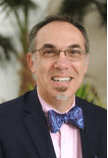
Asm. Adam Gray, right, receiving FBA award from legislative advocate Dennis Albiani at FBA’s Annual Meeting of Members
The Family Business Association of California, the only organization advocating exclusively for California’s thousands of family businesses, has awarded its first Outstanding Legislator Award to Assembly Member Adam C. Gray, D-Merced, for his record on legislation crucial to family businesses during the recently concluded session.
The award was presented at FBA’s Annual Meeting of Members this month in Sacramento.
“Gray is a member of the influential New Democrats caucus – lawmakers who are committed to a pragmatic approach that promotes the interests of hard-working Californians alienated by the extreme partisanship of both the left and the right,” said FBA Executive Director Robert Rivinius.
“He had a 100 percent voting record on FBA’s key bills this session and played an influential role in advancing business-friendly bills and amending or blocking bills that would have harmed family businesses. That’s not surprising since he comes from a family business background.”
Gray’s grandfather, Ernest Denault, established Merced Dairy Supply to serve the Central Valley’s growing dairy industry and the company continued to thrive under Gray’s father, Robert. In fact, Adam Gray’s first job was washing storage barrels and loading feed bags for the family business.
After graduating from UC Santa Barbara, Gray went to work for then-Assembly Member Dennis Cardoza, focusing on agricultural issues and later owned a small public affairs and communications firm while also serving as a lecturer at UC Merced. He was elected to the Assembly in November 2012.
As the final votes are tallied in California, more races get called for the Democrat challengers taking down the few moderate Republicans that remained in California. The tight race for California Senate District 34 took a shift on Monday when Democrat Tom Umberg pulled ahead of Republican incumbent, state Sen. Janet Nguyen.
Umberg, a retired U.S. Army colonel and previous assemblyman, was leading for the first time since Election Day with 50.09 percent of the votes to Nguyen’s 49.91 percent, according to data released Monday by voting officials. Umberg had 126,824 votes and Nguyen had 126,386 votes, reversing a lead held by Nguyen since the Nov. 6 election.
It’s unclear how many ballots are left to be counted in the district. There are a total of 91,338 ballots left to be tallied in Orange County and an estimated 422,600 left in Los Angeles County.
“What’s interesting is how much it shifted from a safe Nguyen victory to a potential Umberg win,” Mitchell said. If Nguyen loses, “she could be a casualty of national reaction to Trump,” Mitchell added. “She has an ‘R’ next to her name, and that could (make the) difference.”
Another Orange County incumbent trailing in his bid for re-election was Assemblyman Matthew Harper, a Republican from Huntington Beach. Democrat Cottie Petrie-Norris was leading late Monday with 96,238 votes, or 52.5 percent of the ballots counted, to Harper’s 87,082 votes, or 47.5 percent.
The state Senate 34th District includes Little Saigon and parts or all of Seal Beach, Huntington Beach and other north Orange County communities, as well as a portion of Long Beach. Nguyen, 42, is viewed as a moderate Republican. She has served on the Garden Grove City Council, the Orange County Board of Supervisors and more recently the state Senate, where in 2014 she became the first Vietnamese-American elected to the office and the country’s first Vietnamese-American woman state legislator.
In the Bay Area, the last remaining Republican office holder, Assembly Member Catherine Baker, conceded her race to Democrat Rebecca Bauer-Kahan. Bauer-Kahan is an environmental attorney and community activist. Baker’s defeat means the Bay Area no longer has any Republican representatives in the state Legislature.
A victory for Bauer-Kahan had been considered a longshot, because Baker is a moderate Republican and had won the endorsements of the region’s daily newspapers. But Bauer-Kahan, a progressive, benefited from the Democratic blue wave this election cycle — and from strong voter turnout in the East Bay.
The sprawling 16th District runs from Lafayette and Orinda to Livermore. As of Nov. 16, Bauer-Kahan was leading Baker by about 2,500 votes, 50.6 percent to 49.4 percent.
Governor-Elect Newsom announces ‘ambassadors’ for “All In California” transition
Governor-Elect Newsom announced an inclusive “All In California” transition program intended to provide opportunities for all Californians to participate in state government. Part of that program is to enlist “ambassadors” from diverse backgrounds and locations to assist identify qualified candidates from across California wanting to serve. Upon announcing the list of appointees, Newsom said, “These respected leaders will help me as I search for innovative ideas and talent across this state.”
Newsom said his goal in creating the advisory group is to “create an inclusive, people-powered transition that reflects the diversity and values” of California.
According to a November 16 release from the Governor-elect, leaders who have agreed to be “All in California” ambassadors include:
San Francisco Mayor London Breed
San Francisco Mayor Willie Brown (Ret.)
State Senate President pro Tempore John Burton (Ret.)
Laphonza Butler, President, Service Employees International Union (SEIU)
California State Treasurer John Chiang
California State Superintendent of Public Instruction Delaine Eastin (Ret.)
California State Controller Betty Yee
Los Angeles Mayor Eric Garcetti
Long Beach Mayor Robert Garcia
Alice Huffman, California NAACP President
State Senator Christine Kehoe (Ret.)
Monica Lozano, former chair, U.S. Hispanic Media, Inc.
Congressman George Miller (Ret.)
California Secretary of State Alex Padilla
Incoming House Speaker Nancy Pelosi
Art Pulaski, Executive Secretary-Treasurer and CEO, California Labor Federation
Los Angeles County Supervisor Mark Ridley-Thomas
Oakland Mayor Libby Schaaf
Sacramento Mayor Darrell Steinberg
Los Angeles County Supervisor Hilda Solis
Environmental activist Tom Steyer
Fresno Mayor Ashley Swearengin (Ret.)
Stockton Mayor Michael Tubbs
Los Angeles Mayor Antonio Villaraigosa (Ret.)
CalChamber President Allan Zaremberg
Governor-elect Newsom will be sworn in on Monday, January 7.
The U.S. unemployment rate recently fell to 3.7%, a rate last seen in 1969. This very low rate is giving the Fed and many other market watchers reasons to worry that the labor market, and thus the overall economy, may be overheating. While it is true we are late in a business cycle, labor market indicators suggest that we are not as late as we may think. To be precise, job growth remains too high, wage growth remains too low, and the employment rate still has room to rise before we run out of workers and hit full employment.
Elliot Eisenberg
Over the past year, the U.S. working-age population has grown by about 225,000 a month. Given that 60.4% of that population works, that means the US economy needs to create 136,000 jobs/month to keep the unemployment rate stable. However, over the past three months, job growth has averaged 218,000/month, and over the past year 211,000/month. As a result, the economy is creating more jobs than required to simply absorb new labor market entrants. This alone suggests that the economy is not at full employment. When we reach full employment, net new job growth will settle at or about 136,000 jobs/month.
Another sign that we are not on the verge of an overheated labor market is that wage growth remains quite subdued. When an economy is short of workers, employers compete for scarce labor, and in the process push up wages, causing inflation to rise. But we see none of that. Over the past year labor productivity growth has been 1.3%, and if you add to that the Fed’s 2% inflation target, you get 3.3%. Wage growth below 3.3% will not cause inflation to increase. And, sure enough, wage growth over the past year has been just 3.1%. If the economy really was overheating, wages would be growing at a much faster rate.
Another clue that the labor market will not seize up anytime soon is that the percentage of working Americans at 60.4% remains well below its pre-recession peak of 63.4%. While a return to 63.4% is unlikely, due to an aging population, more persons going to college, and a few other factors, the rate has been steadily rising since hitting a cyclical low of 58.2% in July 2011. Moreover, the percentage of 25 to 54-year-old persons (those of prime working age) that are working has been rising for almost eight straight years but is still full one percentage point below its pre-recession peak of 80.3%. As a result, I suspect that the percentage will rise at least a bit higher before it tops out.
Lastly, the unemployment rate is no longer as good a measure of labor force slack as it was in the past. Here is one example why: Until recently, finding part-time work that still allowed one to go on job interviews was virtually impossible. Thus, many who looked for a job were out of necessity unemployed. Today, with platforms such as Uber, TaskRabbit, Fiverr and others, one can be employed while actively looking for a more suitable full-time job. As a result, comparing the low unemployment rate of today to similar rates in the past will lead one to conclude that the labor market is tighter than it really is.
Despite a near 50-year low in the unemployment rate, because of technological changes and a careful reading of demographics and data, it seems that the labor market still has some room to vigorously expand before monthly employment growth must slow. As a result, the Fed need not worry that the 3.7% unemployment rate is indicative of an economy that is about to overheat due to a worker shortage – yet.
Elliot Eisenberg, Ph.D. is President of GraphsandLaughs, LLC and can be reached at Elliot@graphsandlaughs.net. His daily 70-word economics and policy blog can be seen at www.econ70.com. You can subscribe and have the blog delivered directly to your email by visiting the website or by texting the word “BOWTIE” to 22828.
Four more businesses recently joined the Family Business Association of California, the only organization exclusively working to protect the interests of family businesses in Sacramento.
Mag Bay Yachts was founded in 2013 by father and son Michael and Barrett Howarth in Adelanto. The company manufactures fiberglass fishing boats and sells them in the U.S., Mexico, and the Caribbean. They employ 15.
Longhorn Meat Company was established in 1976 and is now owned and operated by second- generation Phil Kattenhorn, who took over when his father retired. The company is a retail meat processor and seller located in Auburn and employs nine. The company has been awarded Best Butcher Shop by the Auburn Journal, and featured in Comstock’s Magazine.
Western Engineering Contractors was founded by Don Carroll in 1982 and has grown the general engineering construction company to 135 employees. The company does grading, paving, and underground construction within a 100-mile radius of Sacramento.
Medina McKelvey LLP is a Roseville-based law firm founded by Alex Medina and Brandon McKelvey in 2014. The firm specializes in wage and hour defense (Private Attorneys General Act, or PAGA lawsuits), employment law, and general litigation.
FBA Executive Director Robert Rivinius said the owners of the four companies recognize the challenges of doing business in California, especially for family-owned firms.
“California’s family businesses create the bulk of new jobs, look at the long-term, treat their employees as extended family and stakeholders, and are far more responsive to local needs than corporations headquartered thousands of miles away,” Rivinius said.
“Yet the state’s ever-increasing tax and regulatory burden makes it harder and harder for these firms to remain strong. During the recently concluded legislative two-year session, FBA led a coalition to defeat a dangerous plan to impose a California inheritance tax that would have jeopardized the future existence of many of these companies, and these four businesses recognize the need for family businesses to band together.”
About the Family Business Association of California (FBA):Founded in 2012, the Family Business Association of California is the only organization working exclusively at the Capitol to educate lawmakers and regulators about the importance of family businesses to the state’s economy and to their communities – and to advocate positions on legislation and regulations. For more information, visit www.myfba.org.
Late in the evening on Sunday September 30, stakeholders, advocates, and constituents received the last email notification from Governor Jerry Brown providing a legislative update on the final bills to be signed or vetoed. In his four-term tenure as governor, he has signed over 20,000 bills into law, including 1,016 this year. This year he also vetoed 16.5 percent of bills that made it to his desk, which is consistent with similar percentages in the 15 other signing periods. Final outcomes for several bills that were a high priority for the Family Business Association at the end of this session are outlined below.
In the final days of session Senator Galgiani introduced SCA 24, which would have limited the tax exclusion for the purchase or transfer of a principal residence from parents or grandparents to their children and would require the property to continue as a principal residence of the transferee. The measure would also have deleted the exemption on the first $1 million of the full cash value of all other real property (often a family business or farm), thereby requiring these properties to be reassessed upon a purchase or transfer.
Families would have been forced to dissolve companies, lay off employees, or sell land in order to pay the substantial tax obligation under required by this bill, supplanting working capital to create jobs and allow business expansion. FBA immediately met with the senator, submitted our oppose letter and alerted the coalition we led last year on the estate tax. While FBA advocates were successful in holding this measure, we expect related efforts to continue next year under the new administration.
Employers also escaped a few burdensome bills due to the Governor’s veto pen. Brown vetoed AB 1870 (Reyes) that would have extended the statute of limitations from one year to three years for all discrimination, harassment, and retaliation claims filed with the Department of Fair Employment and Housing. Brown also vetoed AB 3080 (Gonzalez-Fletcher), which would have prohibited arbitration and settlement agreements for labor and employment claims, creating significant litigation exposure and expense for employers and significantly delaying the resolution of disputes for employees. Both authors have vowed to reintroduce these efforts after the next administration take office.
Of the bills signed into law, employers should be particularly aware of two.
SB 1300 (Jackson) bans nondisclosure agreements in sexual harassment and assault disputes, a practice that was publicly scrutinized as tools of predator filmmaker Harvey Weinstein. And SB 1343 (Mitchell) reduces the sexual harassment training requirement threshold from employers with 50 or more employees to employers with just five or more employees, includes non-supervisorial employees in the training, and requires that the Department of Fair Employment and Housing develop an online training course and make it available on the Department’s Web site. The bill requires that all employers must provide training by January 1, 2020.
In his 50-year career in politics, employers have come to know what to expect from Governor Brown, from the good (stabilizing the budget and workers compensation rates), to the bad (increasing labor and energy costs). We wish Jerry well as he rides off into the Colusa sunset — it’s truly the end of an era. Here’s hoping the next administration will be a golden era for California and not an error. In either instance, FBA will remain at the Capitol to serve you. Thank you for your membership.