While there are many reasons why healthcare spending is growing much faster than the economy — including an aging population and the rising cost of prescription drugs — one problem that gets virtually no attention and is a primary cost driver is cross-subsidies. The reason cross-subsidies exist in the first place is because lawmakers want to subsidize healthcare costs for the poor, the sick, and other potential voters — which is well-meaning — but do not want to raise taxes to pay for these programs. So they hide the taxes they should impose in the form of cross-subsidies.
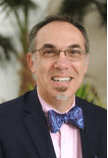
Elliot Eisenberg
Let me explain. If someone with no money walks into an emergency room and needs care, they get care. But to recover the cost of services provided to the indigent, hospitals must overcharge everybody else. Making matters worse, Medicare and Medicaid (MediCal in California) do not pay the full amount of their service cost. As a result, hospitals must substantially overcharge everybody else, and that unlucky bunch is patients with private insurance and those who pay cash.
Of course, giving free or subsidized healthcare to some by overcharging paying customers is essentially imposing a tax on those who can pay in order to subsidize those who can’t or won’t. But — and this is the key — this hidden tax does not appear anywhere. As such, it is politically costless, and that’s why it is so appealing to politicians. If that were all, it would not be so bad. But it gets worse, much worse.
Cross-subsidies are much more inefficient than raising taxes and spending the revenue on, in this case, healthcare. Here’s why. In an ideal market, if a hospital or doctor is going to overcharge some patients, those patients will have an incentive to shop around for a cheaper insurance plan. That insurance plan could be cheaper if it sends patients to hospitals and doctors who don’t overcharge. But if enough such plans were to exist, the entire system would fail because these new low-cost providers would drive the high-cost providers out of business and the poor would not be served. Thus, the introduction of cross-subsidies must be accompanied by a prohibition on competition. One of the ways we see this lack of competition manifesting itself is insurance plans such as bronze, silver, and gold all offering the same services.
And once there is no competition, there is no incentive for any non-competitive service providers to innovate for better care or lower costs, and that, in turn, drives up costs for everyone. If you are old enough, you remember that prior to the 1980s, local phone calls were cheap, often free. That was because long distance calls were very expensive; there was cross-subsidy from long distance calls to local calls. Of course, firms wanted to compete to provide overpriced long-distance calls, but the system would have unraveled. So the federal government gave AT&T a monopoly and, in that way, kept competitors out and prices up.
Once there is no competition, be it in telecommunications, airlines, trucking, banking, or stock trading, inefficiencies multiply and prices rise. Returning to healthcare, because of this lack of any meaningful competition, consumers know the cost of nothing they consume and care even less. What kind of market operates well when prices are well hidden? If there were real price competition, consumers would be bombarded with ads boasting of better prices and outcomes and we would all be winners.
Increasing taxes and spending, while hardly ideal, sure beats cross-subsidies and the attendant monopolies that drive up costs, prevent firm entry, and eliminate innovation. Until cross-subsidies are eliminated, U.S. healthcare costs will continue to spiral out of control and we will be able to do nothing more than wish for a competitive, innovative and efficient healthcare market.
Elliot Eisenberg, Ph.D. is President of GraphsandLaughs, LLC and can be reached at Elliot@graphsandlaughs.net. His daily 70-word economics and policy blog can be seen at www.econ70.com. You can subscribe and have the blog delivered directly to your email by visiting the website or by texting the word “BOWTIE” to 22828.
Early in the morning of September 1, the 2018-19 legislative session was gaveled to a close. During the last month of session, the Legislature acted on over 1,000 measures, the majority of which made it to the Governor. All of the approved bills are on or heading to the Governor’s desk and he has until September 30 to sign or veto them. While Governor Brown is known for being fiscally moderate there could be some surprises this year given his lame-duck status.
At the end of this signing session, the Governor will have acted upon a total of 1,217 Assembly and Senate bills for the 2018 year. There are 2,739 bills that are dead, having failed to meet their respective legislative deadlines or vote thresholds. A breakdown of key issue areas and legislation for the Family Business Association of California is provided below.
Energy
The cost of energy in California remains a significant issue for businesses. However, California leaders maintain their enthusiasm over leading the world on greenhouse gas reduction legislation. FBA weighed in on several proposals and on the eve of the Governor’s Global Climate Summit he signed significant legislation.
SB 100 (De Leon) requires California to obtain 100% of its power from zero greenhouse gas emission sources by 2045. The bill has been debated by lawmakers for nearly two years as it faced cost and feasibility concerns. In addition to the 2045 target, SB 100 would also require electric utilities and other service providers to generate 60% of their power from renewable sources by 2030, up from the current 50% goal set for that date. CHAPTERED The Governor’s signing message for SB 100 can be found here.
Labor
FBA has been engaging in several labor legislative issues this year working with coalitions to oppose many and support a few such as PAGA reform.
AB 2841 (Gonzalez-Fletcher) would have mandated an increase in paid sick leave from 3 to 5 days per employee per year. The bill faced incredible opposition from the business community and ultimately died in Assembly Appropriations.
AB 3080 (Gonzalez-Fletcher) would have significantly expanded employment litigation and increased costs for employers and employees by banning settlement agreements for labor and employment claims as well as arbitration agreements made as a condition of employment. The bill died in Assembly Appropriations.
SB 1284 (Jackson) would have required California employers to submit pay data to the Department of Industrial Relations, subjecting employers to unfair public criticism, enforcement measures, and significant litigation costs. The bill died in Assembly Appropriations.
SB 1300 (Jackson) would significantly increase litigation by substantially lowering the standard for what constitutes standing to sue an employer for harassment or discrimination from “severe or pervasive” to “makes it more difficult to do the job.” This bill also bans the use of non-disparagement agreements and attempts to limit the ability to summarily adjudicate harassment claims forcing employment practices claims into court or costly settlements. These claims are very expensive to investigate and defend, even if there was no actual wrongdoing by the employer. The scope of this bill was significantly narrowed in the Assembly Appropriations Committee by removing language requiring employers to provide sexual harassment training, including bystander intervention training, as well as eliminating language that individuals could sue employers without having endured harassment or discrimination. The bill is on the Governor’s desk awaiting signature.
AB 2613 (Reyes) would have imposed another layer of Labor Code penalties for wage and hour violations in addition to the penalties already available under PAGA and imposed personal liability onto employees. Due to strong opposition, the author never brought the bill up for a vote.
Taxation
Tax policy continues to be a leading issue for FBA and area of major discussion at the Capitol. FBA led the fight against the estate tax earlier this year and maintained the fight on the measures that continued to receive attention all session.
SB 993 (Hertzberg) was another attempt to shift to a tax on services. The measure would have expanded the sales and use tax law to impose a tax on the purchase of services by businesses in California. The bill would have exempted certain types of services, including health care services, from the tax. In a twist over his previous legislation, Hertzberg directed the funds to be appropriated to provide tax relief to middle-income and low-income Californians. The bill was never brought up for a vote. Informational hearings were scheduled instead to research the issue further but never took place.
SCA 24 (Galgiani) would have created financial hardships for family businesses and farms that could have resulted in liquidation of the business and loss of jobs for the employees. SCA 24 would have limited the exclusion not deemed to be a “purchase” or “change in ownership” for the purchase or transfer of a principal residence from parents or grandparents to their children, and would have required it to continue as a principal residence of the transferee. The measure also would have deleted the exemption on the first $1 million of the full cash value of all other real property, including family businesses and farms, thereby requiring these properties to be reassessed upon a transfer to a child or grandchild. The bill was never voted on.
Water Tax Fails. Governor Brown tried and failed to secure a deal to provide safe drinking water funding for disadvantaged communities in California. After failing to win approval of a mandatory tax on water bills earlier this year, Senator Monning introduced SB 844and SB 845 in the last two weeks of the session that would have applied a voluntary levy on ratepayers of less than $1 per month and would have established a tax on dairies and fertilizer manufacturers. The bills were held in the Appropriations Committee but Assembly Speaker Rendon released a statement saying that they will work on this issue over the fall and be prepared to discuss the issue during the next legislative session.
Family businesses are often the pillars of their community. A case in point is Peterson Holding Companies, the parent firm of FBA Member Peterson Cat. The company was founded in 1936 by founder and company namesake Howard Peterson and now his grandson, Duane Doyle, is the company president.
Peterson Holding Company, and all wholly owned subsidiaries (“Peterson”), are committed to partnering with nonprofit and charitable organizations within the communities we serve. To request a consideration for a donation or equipment rental for your organization, please complete this application and return it to Peterson in the Community by email, fax, or mail.
Among the numerous charities and nonprofits the company has assisted over the years are TLC for Kids Sports, Miracle League of the North Bay, the National Breast Cancer Foundation, the Susan G Komen Foundation, the Salvation Army, and the Oakland Zoo.
Statistically, family businesses are far more likely to give back to their communities. They are based there, not in a city half a continent away, the owners have likely lived there for generations. They have deep roots.
FBA salutes Peterson and all its members for their community involvement. And we remind state lawmakers and regulators that this is just another reason why California should encourage family businesses to thrive from generation to generation, not hinder them.
FBA has prepared a new video to promote membership in the Association. Produced by Marquee Media US, it features several FBA officers, board members, and company owners saying why FBA is crucial to the continued success of family businesses in California and how more members can expand our influence at the Capitol.
Thanks to Chairman Ken Monroe, Treasurer/Secretary Grant Deary, Board Members Kurt Glassman, Carol Burger, and Alfred Garcia, and Corrie Nichols Davis, the managing partner of Founding Member Gorrill Ranch, for assisting in the production.
The video can be viewed on the About Us page. Please feel free to share it with fellow members and prospects!
The U.S. economy is, at present, growing very rapidly, and 2018 is shaping up to be the best year for economic growth since 2006. As a result, the Federal Reserve is a lock to raise rates by a quarter-point in September, and there is at least a 70% chance that they will do so again in December to cool down growth and prevent inflation from taking hold. But plenty can go wrong with this forecast. Contagion from an emerging market or financial crisis is always possible, but the biggest immediate threat comes from the rapidly escalating trade war we are in.
Elliot Eisenberg
The most likely outcome of rising trade tariffs is a premature pause in the current interest rate rising cycle. This is because a trade war will cause business demand for physical plant, equipment, and employees to contract due to heightened economic uncertainty. Trade wars will also cause consumer demand to lessen due to rising unemployment, higher prices, and falling consumer confidence, exacerbated by a decline in equity values. While such a slowdown would not be expected to be that large, it would still slow GDP growth and interest rate increases. If, however, the hit to GDP is bigger than anticipated, because the quantity of imported goods facing steep tariffs rises substantially, rates could be reduced to ward off a possible recession. That would only occur if other factors came into play, as the current $50 billion in products facing tariffs along with any retaliatory actions by other nations is not nearly large enough to meaningfully reduce GDP, let alone drive us into recession.
The bigger fear is that a trade war has the opposite effect on monetary policy and forces the Fed to raise interest rates. If this occurs, it would be very destructive to both Main Street and Wall Street. For this to happen, the economy would need to experience a series of strong negative supply shocks. It might happen like this: global trade conflicts quickly escalate, significantly driving up the cost of many imported goods as well as domestically-produced substitutes. This sudden rise in prices would raise production costs, which would, in turn, lead to inflation and a rise in the dollar and unemployment as exports decline and policy uncertainty rises. Worse, the rise in inflation could cause long-term inflation expectations to not only rise but also become somewhat permanently embedded in markets, such that higher inflation expectations persist even after the economy returns to normal. This is precisely what happened in the late 1960s and eventually led to 20% interest rates in the late 1970s and early 1980s.
With this history still quite fresh in the institutional memory of the Federal Reserve, policy makers would be expected to respond to such a situation by raising interest rates to wring out any permanent rise in inflation expectations. This is precisely what was done in the early 1980s by then Fed Chairman Paul Volker. Of course, this rise in rates would slow growth and weaken the economy even more.
While the chances of seeing rates rise to ward off a rise in inflation expectations is highly unlikely, it is a worst case-scenario for both the economy and financial markets. This is because it offers a combination of faster inflation, weaker growth, and tighter monetary policy. My baseline is that the impacts of rising tariffs and protectionism are too limited to meaningfully alter the course of monetary policy. But, in the fog of (a trade) war, things inevitably go awry — just think of Harley-Davidson’s unexpected decision to shift to offshore manufacturing — and adversaries respond in ways not anticipated; be prepared.
Elliot Eisenberg, Ph.D. is President of GraphsandLaughs, LLC and can be reached at Elliot@graphsandlaughs.net. His daily 70-word economics and policy blog can be seen at www.econ70.com. You can subscribe and have the blog delivered directly to your email by visiting the website or by texting the word “BOWTIE” to 22828.
The Legislature has adjourned for a month long summer recess and will return on August 6th for the final four weeks of this legislative year. A month “off of work” is hardly the summer dream it sounds like. All statewide offices, Assembly seats and half of the Senate is up for election in November and the summer will be spent shaking hands, kissing babies, and negotiating the final compromises on the remaining 1,800 bills that can be voted on prior to the August 31 Final Recess.
The Assembly remains under the leadership of Speaker Anthony Rendon and the Senate is being captained by former Assembly Speaker turned President Pro Tem Toni Atkins, who recently replaced Kevin de León. After the special elections in June, both leaders enjoy near-supermajorities in their houses, with the Senate one Democrat short after the recall of Josh Newman. This ensures relative ease of passage for leadership priorities that require a simple majority vote. However, there remains a small handful of bills that would need to garner a two-thirds majority vote. Chief among those bills are tax measures SB 993 and SB 623.
Earlier this year, FBA legislative advocates and a coalition of employer groups were successful in temporarily stopping a huge tax increase proposed in SB 993 (Hertzberg). This bill would impose a tax on all services purchased by California businesses with gross receipts of more than $100,000 a year with limited exceptions. FBA Treasurer/Secretary Grant Deary provided key testimony in the Senate Governance and Finance Committee on the significant competitive disadvantage this would force on family business employers at a time when we should be providing incentives for family businesses to continue to create jobs and invest in California. This bill was held in the committee but the fight continues as an informational hearing to discuss imposing taxes on services used by businesses has been scheduled for August 8.
This hearing is intended to provide a broad overview of our existing tax structure as well as discuss concerns with implementing and administering a tax on services. As an informational hearing, the committee does NOT plan to vote on SB 993 on August 8. Additional informational hearings may be scheduled during the legislative recess in Northern and Southern California. We will keep members apprised of related developments and will continue to lead efforts to stop this tax increase of tens of billions of dollars a year which would hurt working families by causing less economic growth, lower wages, and fewer jobs.
The other bill we’re keeping a close eye on is SB 623 (Monning), which would provide a monthly assessment on every water user in California. The legislation would create the Safe Drinking Water Account to provide grants and loans to water entities located in disadvantaged communities to clean up contaminated groundwater. The assessment would be $10 a year for residential customers and would not exceed $12 a month on commercial and industrial customers.
The bill also would includes an assessment on fertilizer and animal agriculture to address nitrate contamination but provides agricultural interests participating in the program a safe harbor from enforcement by the Water Resources Control Board. Many in agriculture are supporting the assessment due to aggressive enforcement actions being implemented by the current Water Board but many water districts oppose it because of the cost.

 Family businesses are often the pillars of their community. A case in point is Peterson Holding Companies, the parent firm of FBA Member Peterson Cat. The company was founded in 1936 by founder and company namesake Howard Peterson and now his grandson, Duane Doyle, is the company president.