FBA has joined a coalition opposing SB 1127 (Atkins), which fundamentally alters longstanding rules and timeframes for determining eligibility for workers’ compensation claims and, as drafted, would dramatically increase systemic friction and litigation. SB 1127 reduces the timeline for employers to make a decision about covering a claimed injury but it does not harmonize any of the other statutes and regulations that prevent employers from complying with the new timeline. The bill changes the rules for all claims – including public- and private-sector employers – but the provisions as they apply to public employers are especially challenging.
SB 1127 has three main provisions, all of which are problematic:
Reduces the timeframe allotted for employers to investigate claims
Imposes massive new penalties on employers
More than doubles duration of temporary disability for cancer presumption claims
In addition, SB 1127 does not provide sufficient time to investigate claims, it creates new penalties that make taxpayer funded presumption claims dangerous to investigate, and it more than doubles temporary disability benefits.
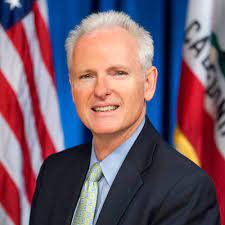
The Family Business Association of California is committed to helping our state’s 1.4 million family-owned businesses survive and prosper. To do this more effectively, a common agreement and understanding of what constitutes a family business is necessary. The Family Business Association is taking on this challenge by sponsoring AB 2611, introduced on February 18 by Assembly Member Tom Daly, D-Anaheim (left).
AB 2611 sets out, for the first time in state statute, a definition of a family-owned business. A statutory definition of a family-owned business is important for California because a family-owned businesses is distinct in many ways — both in terms of successes and challenges. AB 2611 sets out that, to be deemed a family-owned businesses in statute, the business must be privately held; strategic influence is exercised by family members; the business must demonstrate continuity across generations; have its headquarters located in California; and have been in business for no less than 10 years.
A uniform clear definition will provide many benefits including one that can be referenced across codes in California including Tax and Government codes and it provides one definition that can be referenced by local municipalities that want to promote family-owned businesses within their local jurisdictions.
Under AB 2611, the definition of a family-owned business is proposed to be added to the statues covering the Governor’s Office of Business and Economic Development (GO-Biz) program. The successful GO-Biz program offers a range of services to business owners including attraction, retention and expansion services, site selection, permit streamlining, clearing of regulatory hurdles, small business assistance, international trade development, assistance with state government, and much more. Importantly, AB 2611 will let California lead the nation in a positive direction by being the first state to statutorily define a family-owned business so that decision makers are able to better understand the unique challenges of operating community-based businesses when considering future legislative and regulatory actions.
The ongoing debate about businesses moving out of California rages on, with business groups pointing to the number of headquarters moving out of California and many of our politicians pointing to California’s rank as the fifth-largest economy in the world with tech start-ups still growing.
Most family businesses have many key performance indicators (KPIs) they use to measure their success, and well-managed companies focus on the critical few KPIs that will present a major issue for the business if they turn down.
Unfortunately, besides their poll numbers and fundraising for future elections, many politicians don’t seem to focus on critical indicators. But one irrefutable negative indicator that they should be watching and start doing something about is the loss of a congressional seat. Our politicians proudly boast that legislation passed in California will be the lead for the rest of the country, but for the first time in 171 years, California’s political voice is getting a little softer as our population actually decreased in 2020.
Most family businesses try to ensure a stable, consistent workplace by treating employees like family, and as a result many choose to stay with that company for their entire careers. At my family business, Holt of California, we ask our employees to complete an exit interview if they leave the company. That allows us to look at overall trends and enables us to make adjustments if there appears to be an area where employee satisfaction lags.
Over the past few years, we have seen an increase in the number of employees leaving for other states. In the past two years alone, we have had 30 employees leave the state. All were hardworking, excellent employees and none are easily replaced. While with employees who are leaving our company but staying in California we can modify compensation, vacation and other benefits to get them to stay or come back, there is little we can do to convince employees who have decided to leave the state to stay. In fact, many employees who left the company but remained in California came back to work for us after discovering the grass is not always greener elsewhere. We have only had one come back from out of state.
Reasons to leave the state vary. Many follow their adult children who moved elsewhere to look for opportunity. But many others leave to improve their own qu
ality of life, citing California’s high cost of living, the homeless crisis and cultural issues. Statistics show that the majority of people moving out are blue-collar families with children who have had enough and see a better future elsewhere. In short, the reason California has always grown is why our population is declining: people see the way to a better life elsewhere.
California’s 1.4 million family businesses employ 7 million Californians. However, the impacts from COVID-19 have created a significant challenge for our members to find enough employees to get the job done. Just look at all the help-wanted banners you see as you drive down the street. It is difficult to find enough new employees to serve our customers and the last thing we need is employees leaving the state for good. Unless corrected, the shrinking workforce that we are seeing will damage California’s ability to continue to maintain that high economic worldwide status we so proudly proclaim as a final measure of our success.
Perhaps our politicians need to develop an exit interview for the productive residents leaving the state and use the information to adjust their policies to encourage people to stay and help family businesses recruit those that left back to the companies and jobs that they once loved.
Two businesses recently joined the Family Business Association of California, the only organization in the state that focuses exclusively on issues affecting California’s 1.4 million family businesses.
Ming’s Recycling Corporation recycles 230,000 tons of aluminum cans, plastic, fiber, and non-ferrous metals every year. Founded in 1989 by Ming Luong, the Sacramento-based company employs 110 people and operates a second location in Hayward. Luong’s son, Kenny, is the current president and his brother, Kevin, gave up his practice as an orthopedic surgeon in 2006 to join the company as marketing director and CFO.
Joining as an associate member is The Policy and Taxation Group, a company formed in 2013 to fight the federal death tax and educate the public about estate and fight taxes and generation-skipping issues that can seriously affect the ability of family businesses to remain family-owned into the next generation. The group is based in Anaheim Hills.
FBA Executive Director Robert Rivinius welcomed the new members and said they will further enhance the Association’s ability to educate state policymakers about the importance of family businesses.
“California’s family businesses employ an estimated 7 million people statewide and are important foundations of their communities, yet the state continues to add requirements that make it harder for these Main Street businesses to succeed,” Rivinius said. “There is strength in numbers, and we appreciate the support that these two companies will make to our mission.”
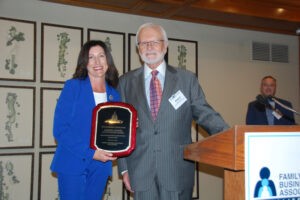
The Family Business Association of California has named Assemblywoman Cottie Petrie-Norris as its Outstanding Legislator for 2021 for her strong support of family businesses and efforts to improve California’s business climate.
Petrie-Norris, a Democrat, represents coastal Orange County. A businesswoman and community leader, she chairs the Accountability and Administrative Review Committee and the Select Committee on Small Business and Entrepreneurship. FBA Executive Director Robert Rivinius said Petrie-Norris has carved out a solid position as a business-oriented lawmaker who understands the needs of family businesses.
“Assemblywoman Petrie-Norris was a successful businesswoman before entering politics, and as a lawmaker she has demonstrated that she wants to help businesses grow and create jobs,” Rivinius said. “She is a founding member of the California Problem Solvers Caucus, which includes Democrats, Republicans and independents from both the Assembly and Senate who are determined to put partisanship aside and find solutions to our problems.”
Petrie-Norris addressed FBA’s Legislative Conference in May and urged family business owners to reach out to their lawmakers and educate them on how legislative proposals could have disastrous impacts on small- and medium-sized businesses. She later invited Rivinius to testify before the Select Committee on steps the state could take to support businesses.
She has also earned solid ratings from business groups such as the California Chamber of Commerce and the Howard Jarvis Taxpayers Association.
“It is an honor to be recognized by the Family Business Association as the Outstanding Legislator of the Year,” Petrie-Norris said. “Making up nearly 1.4 million businesses, family businesses are a critical driver of California’s economy. I look forward to continuing to work together to remove barriers to success and cultivate opportunities for innovation and growth for California businesses.”
Petrie-Norris grew up in San Diego County and is a graduate of Yale University. Prior to being elected to the Assembly, she had a successful career in finance and technology. She has helped build businesses and lead teams at Fortune 500 corporations, small companies and start-ups.
She lives in Laguna Beach with her husband, Colin, their two sons, Dylan and Hayden, and their rescue dog,
Flounder.
Ballot measure would help parents pass their family business along to their childre
The COVID-19 pandemic hit many family-owned businesses hard. Now as California emerges from the crisis, those businesses are still struggling to stay afloat.
There are 1.4 million family businesses in California. They provide jobs for seven million Californians. These businesses improvised, innovated and gave their blood, sweat and tears to keep their doors open during the height of the pandemic.
It’s now been four months since Gov. Gavin Newsom lifted pandemic executive orders and reopened the state. Yet despite what we all hoped would be a return to normal, California family businesses continue to face more uncertainty.
First, the labor shortage is causing many businesses to cut operating hours or delay expansions that could grow their business. Then the Delta variant hit — spreading throughout the state and causing renewed alarm. And supply chain shortages that are so frustrating for consumers are squeezing businesses who are already under strain and now are unable to restock shelves.
Through all this, family businesses have been learning the full effects of Prop 19, which narrowly passed in November 2020 and brought the Death Tax back to California.
Prop. 19 had some good elements, but it took away voter-approved constitutional protections that allowed families to keep a business or home they worked so hard to acquire.
Now when a parent passes away and leaves behind a family business or home, their children are hit with the Death Tax — reassessment to current market value, triggering a massive property tax increase in the midst of grieving a parent’s death.
The Death Tax is cruel and unfair. When the children can’t come up with the cash to pay the new annual property tax bill, they are forced into an unwanted sale. Lost are California family businesses that took decades of hard work to build along with the dream of passing on a legacy to children and grandchildren.
California can’t afford to lose more family businesses who are uniquely connected and invested in the success of their local community.
That’s why it is so important that we pass the Repeal the Death Tax Act, which will soon be gathering signatures for the November 2022 statewide ballot.
The Repeal the Death Tax Act will restore the constitutional taxpayer protections that California family businesses relied on for nearly 35 years.
The measure brings back the ability of Californians to transfer a family business, farm or other non-primary residential property, valued up to $2.4 million and indexed for inflation, to their children upon the property owner’s death without triggering reassessment and a huge property tax increase.
The measure will also allow parents and grandparents to again transfer their homes to their children and grandchildren upon death and maintain the property taxes at current level.
In essence, the Repeal the Death Tax Act will help to preserve the long-term wishes of parents to pass on their family business or home to their children.
Please think of the family businesses that you rely on. They may have been in operation for generations, not only serving customers but giving back to the entire community. We need these family-owned businesses in California. So when you see signature gatherers in front of stores, please sign the petition for the Repeal the Death Tax Act or visit HJTA.org/RepealTheDeathTax to learn how you can help.
This op-ed originally appeared in the Mercury News.
 The Family Business Association of California is committed to helping our state’s 1.4 million family-owned businesses survive and prosper. To do this more effectively, a common agreement and understanding of what constitutes a family business is necessary. The Family Business Association is taking on this challenge by sponsoring AB 2611, introduced on February 18 by Assembly Member Tom Daly, D-Anaheim (left).