Firms in Petaluma, West Sacramento, Chico, and Salinas seek to protect family business
Four businesses recently joined the Family Business Association of California, the only organization exclusively working to protect the interests of family businesses in Sacramento.
Clover Sonoma has joined FBA as a founding member, the highest level of membership. The company was founded in1916 as the Petaluma Cooperative Creamery and remained a cooperative until the mid 1970s, when the biggest fire in Petaluma’s history destroyed the processing and bottling operations. Clover Stornetta Farms was born in 1977 when Gene Benedetti purchased the wholesale distribution business after the co-op decided not to rebuild. Gene’s son, Dan, succeeded him as president in 1986 and the company was an early entrant into organics. Third-generation president Marcus Benedetti became president in 2006, and added the title of chairman of the board in 2015. They are a major dairy products company with 240 employees headquartered in Petaluma. The company rebranded as Clover Sonoma in 2017.
Three other businesses have joined as regular members.
The Sacramento River Cats, a Triple A baseball team affiliated with the San Francisco Giants, was founded by Art Savage in 1999 and has been one of the most successful minor league sports teams in the country. Art passed away several years ago after a brief illness, and his wife, Susan, is now CEO and majority owner, and son Jeff is president of the team. The team is headquartered in West Sacramento where they play baseball at Raley Field. They have 60 full time employees.
Chico-based Northgate Petroleum Company was founded in 1922 with a two-horse-drawn tank wagon. It also established Chico’s first Shell gas station. Bud Caldwell and a partner purchased the company in 1988 and they provide fuels and lubricants in Northern California and Central Nevada.
And Corral De Tierra Cattle Company is a first-generation Monterey County ranch raising grass-finished Angus cattle and providing land management services. The first-generation company owned by Mark Farr focuses on raising premium beef while incorporating regenerative land stewardship into its day-to-day management.
FBA Executive Director Robert Rivinius said the four companies recognize the challenges of doing business in California and seek to remain family-owned in the years to come.
“California’s family businesses are the pillars of their communities. They create the bulk of new jobs, look at the long-term, treat their employees as extended family and stakeholders, and are far more responsive to local needs than corporations headquartered thousands of miles away,” Rivinius said.
“Yet the state’s ever-increasing tax and regulatory burden makes it harder and harder for these firms to remain strong. This year, FBA led a coalition to defeat a dangerous plan to impose a California inheritance tax that would have jeopardized the future existence of many of these companies, and these four businesses recognize the need for family businesses to band together.”
About the Family Business Association of California (FBA): Founded in 2012, the Family Business Association of California is the only organization working exclusively at the Capitol to educate lawmakers and regulators about the importance of family businesses to the state’s economy and to their communities – and to advocate positions on legislation and regulations. For more information, visit www.myfba.org.
FBA has prepared a new video to promote membership in the Association. Produced by Marquee Media US, it features several FBA officers, board members, and company owners saying why FBA is crucial to the continued success of family businesses in California and how more members can expand our influence at the Capitol.
Thanks to Chairman Ken Monroe, Treasurer/Secretary Grant Deary, Board Members Kurt Glassman, Carol Burger, and Alfred Garcia, and Corrie Nichols Davis, the managing partner of Founding Member Gorrill Ranch, for assisting in the production.
The video can be viewed on the About Us page. Please feel free to share it with fellow members and prospects!
The U.S. economy is, at present, growing very rapidly, and 2018 is shaping up to be the best year for economic growth since 2006. As a result, the Federal Reserve is a lock to raise rates by a quarter-point in September, and there is at least a 70% chance that they will do so again in December to cool down growth and prevent inflation from taking hold. But plenty can go wrong with this forecast. Contagion from an emerging market or financial crisis is always possible, but the biggest immediate threat comes from the rapidly escalating trade war we are in.
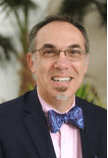
Elliot Eisenberg
The most likely outcome of rising trade tariffs is a premature pause in the current interest rate rising cycle. This is because a trade war will cause business demand for physical plant, equipment, and employees to contract due to heightened economic uncertainty. Trade wars will also cause consumer demand to lessen due to rising unemployment, higher prices, and falling consumer confidence, exacerbated by a decline in equity values. While such a slowdown would not be expected to be that large, it would still slow GDP growth and interest rate increases. If, however, the hit to GDP is bigger than anticipated, because the quantity of imported goods facing steep tariffs rises substantially, rates could be reduced to ward off a possible recession. That would only occur if other factors came into play, as the current $50 billion in products facing tariffs along with any retaliatory actions by other nations is not nearly large enough to meaningfully reduce GDP, let alone drive us into recession.
The bigger fear is that a trade war has the opposite effect on monetary policy and forces the Fed to raise interest rates. If this occurs, it would be very destructive to both Main Street and Wall Street. For this to happen, the economy would need to experience a series of strong negative supply shocks. It might happen like this: global trade conflicts quickly escalate, significantly driving up the cost of many imported goods as well as domestically-produced substitutes. This sudden rise in prices would raise production costs, which would, in turn, lead to inflation and a rise in the dollar and unemployment as exports decline and policy uncertainty rises. Worse, the rise in inflation could cause long-term inflation expectations to not only rise but also become somewhat permanently embedded in markets, such that higher inflation expectations persist even after the economy returns to normal. This is precisely what happened in the late 1960s and eventually led to 20% interest rates in the late 1970s and early 1980s.
With this history still quite fresh in the institutional memory of the Federal Reserve, policy makers would be expected to respond to such a situation by raising interest rates to wring out any permanent rise in inflation expectations. This is precisely what was done in the early 1980s by then Fed Chairman Paul Volker. Of course, this rise in rates would slow growth and weaken the economy even more.
While the chances of seeing rates rise to ward off a rise in inflation expectations is highly unlikely, it is a worst case-scenario for both the economy and financial markets. This is because it offers a combination of faster inflation, weaker growth, and tighter monetary policy. My baseline is that the impacts of rising tariffs and protectionism are too limited to meaningfully alter the course of monetary policy. But, in the fog of (a trade) war, things inevitably go awry — just think of Harley-Davidson’s unexpected decision to shift to offshore manufacturing — and adversaries respond in ways not anticipated; be prepared.
Elliot Eisenberg, Ph.D. is President of GraphsandLaughs, LLC and can be reached at Elliot@graphsandlaughs.net. His daily 70-word economics and policy blog can be seen at www.econ70.com. You can subscribe and have the blog delivered directly to your email by visiting the website or by texting the word “BOWTIE” to 22828.
The Legislature has adjourned for a month long summer recess and will return on August 6th for the final four weeks of this legislative year. A month “off of work” is hardly the summer dream it sounds like. All statewide offices, Assembly seats and half of the Senate is up for election in November and the summer will be spent shaking hands, kissing babies, and negotiating the final compromises on the remaining 1,800 bills that can be voted on prior to the August 31 Final Recess.
The Assembly remains under the leadership of Speaker Anthony Rendon and the Senate is being captained by former Assembly Speaker turned President Pro Tem Toni Atkins, who recently replaced Kevin de León. After the special elections in June, both leaders enjoy near-supermajorities in their houses, with the Senate one Democrat short after the recall of Josh Newman. This ensures relative ease of passage for leadership priorities that require a simple majority vote. However, there remains a small handful of bills that would need to garner a two-thirds majority vote. Chief among those bills are tax measures SB 993 and SB 623.
Earlier this year, FBA legislative advocates and a coalition of employer groups were successful in temporarily stopping a huge tax increase proposed in SB 993 (Hertzberg). This bill would impose a tax on all services purchased by California businesses with gross receipts of more than $100,000 a year with limited exceptions. FBA Treasurer/Secretary Grant Deary provided key testimony in the Senate Governance and Finance Committee on the significant competitive disadvantage this would force on family business employers at a time when we should be providing incentives for family businesses to continue to create jobs and invest in California. This bill was held in the committee but the fight continues as an informational hearing to discuss imposing taxes on services used by businesses has been scheduled for August 8.
This hearing is intended to provide a broad overview of our existing tax structure as well as discuss concerns with implementing and administering a tax on services. As an informational hearing, the committee does NOT plan to vote on SB 993 on August 8. Additional informational hearings may be scheduled during the legislative recess in Northern and Southern California. We will keep members apprised of related developments and will continue to lead efforts to stop this tax increase of tens of billions of dollars a year which would hurt working families by causing less economic growth, lower wages, and fewer jobs.
The other bill we’re keeping a close eye on is SB 623 (Monning), which would provide a monthly assessment on every water user in California. The legislation would create the Safe Drinking Water Account to provide grants and loans to water entities located in disadvantaged communities to clean up contaminated groundwater. The assessment would be $10 a year for residential customers and would not exceed $12 a month on commercial and industrial customers.
The bill also would includes an assessment on fertilizer and animal agriculture to address nitrate contamination but provides agricultural interests participating in the program a safe harbor from enforcement by the Water Resources Control Board. Many in agriculture are supporting the assessment due to aggressive enforcement actions being implemented by the current Water Board but many water districts oppose it because of the cost.
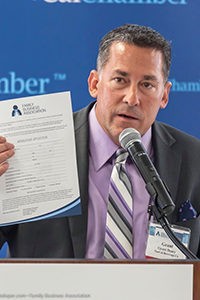
FBA Government Affairs Chair Grant Deary testified last week before the Senate Governance and Finance Committee in opposition to SB 993 (Hertzberg). The bill would impose a 3 percent tax on professional services purchased by businesses in exchange for a 2 percent reduction in the statewide sales and use tax. The bill has already been given the “job-killer” label by the California Chamber of Chamber due to tremendous impact it would have on all businesses in California.
Deary, who of nearly 50 speakers in opposition to the bill was the only business owner, testified on behalf of the FBA and discussed the specific impact on family businesses that may contract out professional services at a higher rate since several may not have the in-house expertise of multinational firms or to reduce needs for capital. In addition, he made reference to the challenges that firms like his, Nor-Cal Beverage, may have in apportioning the tax on contracts that contain both a good, that is untaxed, and a service, that may be taxed. This will increase tax liability and the entire bill will have significant compliance costs to family businesses.
While proponents argue that this service tax would only “target high-end services” — such as lawyers or accountants — these services are a part of doing business and the definitions in the bill of “qualified businesses” are broad. The result of any tax increase means increased costs for customers or businesses paying the difference. While the measure does include some exemptions including utilities, equipment, and machinery repair, as well as services necessary in food production, the result will still be higher costs. SB 993 also creates confusion for multistate businesses because the service tax only applies to services received in California. Additionally, all businesses will have increased costs of compliance attempting to understand and implement the tax requirements.
The hearing, which lasted nearly two hours and included robust discussion on all sides of the issue, was the first in a series of hearings intended to hear feedback on the proposed bill. The next hearing will take place on June 13.
While Lippow Development Co. is officially celebrating its 70thanniversary this year, the Martinez-based family business really began decades earlier, when family patriarch Leo Lippow opened a bike shop outside of Milwaukee, Wis. During the first decade of the 20thcentury, that same bike shop morphed into one of the nation’s first Harley-Davidson dealers.
As company President and CEO Larry Lippow (third-generation owner) remembers, the saga was far more all-American than owning a bike shop that also sold Harleys.
Larry’s grandfather, Leo Lippovaski, was a Polish Jew living in the Russian Empire, a country marked by pogroms and less-violent anti-Semitism at the turn of the 20thcentury. Leo wanted to start a new life in America and saved up enough money to buy passage on a ship for himself and his mother. Together, they sailed into New York Harbor in 1904.
“They came through Ellis Island and brought all of their belongings in one suitcase,” Larry said. Like so many immigrants, the clerk decided that their family name was too foreign for America and changed it to Lippow.
“He just marked his name with an X and when he was done he turned around and saw someone had stolen their suitcase. He and his mother had literally nothing except a few coins in his pocket,” Larry said, noting that the family has passed that story down from generation to generation to remind everyone that what they have was built on the backs of their forebears.
Leo Lippow’s bicycle store outside Milwaukee.
An interior view of the shop.
The new arrivals had relatives in the Milwaukee area and somehow found transportation. When they arrived, Leo soon approached the owner of a nearby bicycle shop (as the Wright Brothers knew, an important business at the time) and made a proposal. If the owner would allow Leo and his mother to live in the back of the shop free of rent, Leo would work for free and only ask to be taught the business.
A year or so later, the bike shop owner decided to sell the business and the property and Leo made another proposal: to buy both and pay the seller over time. The deal was consummated. Leo quickly grew the business by adding Harley-Davidson motorcycles to his inventory. In an effort to promote the sale of motorcycles, Leo formed one of the country’s first motorcycle clubs to go on rides together and to also have motorcycle races.
He also married, and in 1914 the couple’s only son, Sidney, was born. Sidney had lung problems and their doctor suggested the family relocate somewhere warmer. So, Leo took a train to Southern California to investigate the area and experience the warmer climate. He wound up in a bar in Orange County. Over drinks, a man offered to sell Leo a piece of land, and thinking that it would be a good location to build a bike shop, Leo decided to make the purchase.
“The next day or so, somebody offered him twice as much for the land and he took it. That planted a seed that the real estate business in California might not be a bad idea,” Lippow said.
Leo decided to visit other parts of the Golden State before deciding where to settle down, and to pay for his travels bought a few shares in a bus line that eventually became Greyhound. Shareholders could ride for free, so Leo traveled up the coast and a few days later wound up in another bar, this time in Willows, northwest of Sacramento.
“The owner of the Palace Hotel, restaurant, and bar was also the mayor, and he told my grandfather that he wanted to get out of real estate and focus on politics, so that night my grandfather bought the property and the next day he wired for his family in Milwaukee to pack up and move to Willows,” Lippow said.
There was, however, a problem once the family got settled in Willows. As observant Jews, the Lippows wanted to attend temple, but the closest synagogue was in Sacramento, a long and dusty motorcycle ride away. Eventually, they bought the Traveler’s Hotel in Martinez and the Grand Avenue Garage in Oakland. The family moved to Piedmont and became active members in the synagogue in Oakland.
After graduating from Piedmont High School, Sidney was awarded a football scholarship to attend USC. He only attended for two years before Leo wanted Sidney to come home and start working in the family business. Shortly afterwards, the family moved to Martinez to actively participate in the management of the Traveler’s Hotel and other real estate purchased in the Martinez area.
Leo acquired and sold commercial and residential real estate over the following years and the business flourished. Like many entrepreneurs, Leo wanted to keep control and when he finally formed a corporation in 1948 he kept all the voting stock, giving non-voting stock to other family members. When he died in 1961, Sidney inherited the voting shares. Under Sidney’s watch, the family business continued to grow and expanded its holdings throughout Northern California.
After graduating from the University of Arizona in 1978, Larry turned down an offer from IBM, decided not to pursue an opportunity to attend law school in Arizona, and came home to the Bay Area and work with his dad, and did so until Sidney died in 1986. The company continued to grow and do well after Sidney’s passing.
“I was under the impression we were a big, happy family. Shortly after my dad died I started getting calls from relatives who said they’d always told dad he should have diversified or done things differently. I finally realized that many of our family members wanted to cash in and do other things,” he said.
With the support of his younger sister, Laura Lippow Babiak, Larry decided to give his family members one opportunity to sell 100 percent of their shares in the family business, but he thought the power of the family story would keep most of them together. So he wrote a book about the company’s first 50 years, had copies made for everyone, and made each promise to read it from front to back and then decide in 60 days if they wanted to sell or stay.
“When the day came, I really thought most would remain as shareholders in the family business, but all sold but my younger sister and me. We went from 25 owners to two. I was devastated,” he said.
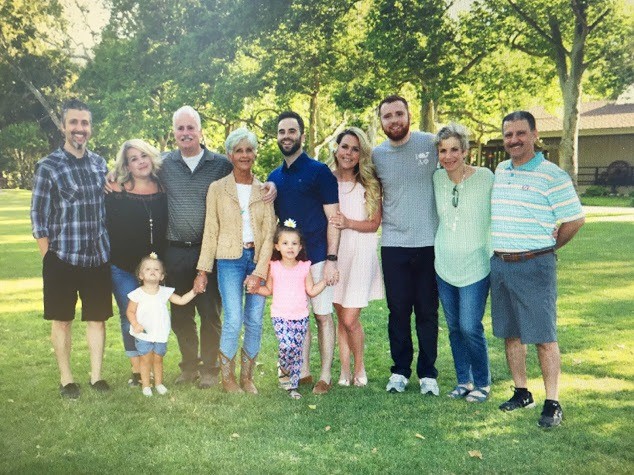
The Lippow family today.
But in the long run, it was a good thing because Larry and Laura were able to move in one direction as a team without any distractions from other owners. In an effort to help ensure the continuance of the family business for the future, Larry and Laura implemented two key things learned from their previous experience dealing with discord from family owners. First, create a buy/sell agreement that clearly spells out shares’ values and method of payment over time that will provide the flexibility to allow the family business to continue to operate in the future and at the same time offer shareholders a tool for liquidity should they decide to sell their ownership interest in the family business. Second, appoint outside and independent directors to its Board of Directors to make sure that the company’s policies are created for the benefit of the business first, and not for the benefit of any specific family member.
“When it comes to corporate governance, I find so many family businesses need help. When you mix in family dynamics on top of the business dynamics, it’s very challenging. I’ve discovered many family businesses are very successful in operations and make a lot of money, but as far as succession planning for owners and formal governance the family businesses usually are weak and sometimes quite dysfunctional,” Larry said. “The lack of communication between family members in regards to succession planning and the need for formal governance always amazes me.”
The company. has expanded from the Bay Area to Arizona in recent years, partly because of California’s growing regulatory burdens and high taxes. Larry remains optimistic about the business, noting he and his sister each have two children and have spent much time trying to educate the next generation about the difference between being an owner in the family business and an employee in the family business. In addition, there has been much discussion in the family about promoting the concept of stewardship. Several of the fourth generation have expressed some interest in becoming active in the management of the family business.
Larry said Lippow Development Co. joined FBA because it’s a great platform to remind lawmakers and regulators that family businesses are huge job creators, tax revenue generators, and entrepreneurs who try to remain nimble and flexible to be able to survive for the long term, both in good and bad economic times.
“If our state government would lower the income tax rate and minimize the many other taxes, fees, rules, and regulations, it would help family enterprises to thrive in California, thereby producing many more job opportunities and revenue for the state. It’s already hard enough to be successful in business, but every year it’s more challenging, especially here in California. I’m not sure some legislators appreciate or understand how their actions impact small businesses,” he said.
In the meantime, Larry continues to love the real estate business. The firm recently sold its last apartment complex and now is focused solely on commercial investments.
“When my kids were young and would bring me to class for show and tell, I would be asked what I do in business. I would say I play Monopoly for a living. I try to pass Go and collect $200 as many times as I can and definitely want to stay out of jail because there’s no get-out-of-jail free card in real life,” he said.
Larry looks forward to the future and takes pride in building Lippow Development Co.’s legacy with inclusion of the fourth generation of the Lippow family. At the same time, it is important at all times to educate and remind the family of the previous Lippow generations’ sacrifices made for the family business and the family’s humble beginnings in the United States, and that these values and idea — along with the opportunity to continue to play Monopoly, whether that be in California, Arizona, Nevada, Utah, or Texas — still gets him excited to go to work each and every day.